What Is Included in a New York DMV 5 Hour Driving Class?

You’re sitting in the DMV waiting room, clutching that paper with all the requirements for your New York driver’s license, and suddenly your eyes land on something that makes your stomach drop: “5-hour pre-licensing course.”
Wait… what?
If you’re like most people, you probably thought getting your license was just about passing the road test. Maybe you figured you’d study the handbook, practice parallel parking until your eyes crossed, and boom – you’d be cruising down the highway with your shiny new license. But here’s the thing about New York… they like to keep things interesting.
That 5-hour course? It’s not just some bureaucratic hoop they’ve set up to make your life more complicated (though I know it might feel that way when you’re already juggling work, school, or family responsibilities). Actually, it’s designed to fill in the gaps – you know, all those real-world driving situations that somehow never come up during your practice sessions with your overly nervous parent gripping the passenger seat.
Think about it… when’s the last time your driving instructor had you practice what to do when someone’s tailgating you aggressively on the Cross Bronx Expressway? Or how to handle that moment when you’re driving through Queens and suddenly realize you have absolutely no idea where you are, but your phone just died? Yeah, those scenarios don’t exactly fit neatly into a standard driving lesson.
Here’s what I find fascinating about this requirement – New York is essentially saying, “Look, we know you can probably figure out which pedal makes the car go and which one makes it stop. But can you handle the psychological warfare that is merging onto the FDR Drive during rush hour?” Because let’s be honest, that’s what driving in New York really is sometimes.
The thing is, most new drivers (and honestly, plenty of experienced ones) don’t realize how much mental preparation goes into safe driving. You might be thinking, “Come on, how hard can it be? I’ve been a passenger for years!” But there’s a massive difference between watching someone else navigate traffic and being the one making split-second decisions while three lanes of traffic are moving at wildly different speeds around you.
And here’s where it gets interesting… this isn’t your typical classroom situation where someone drones on about traffic laws while you fight to stay awake. The 5-hour course is designed to be interactive, practical, and – dare I say it – actually useful for your day-to-day driving life. They cover everything from the obvious stuff (like understanding road signs that aren’t in your practice test) to the not-so-obvious psychological aspects of driving that nobody really talks about.
You know that moment when you’re driving and suddenly become hyper-aware that you’re controlling a two-ton piece of metal moving at high speeds? And for just a second, it feels overwhelming? That’s exactly the kind of thing this course addresses – not with fear tactics, but with practical strategies for staying calm and focused.
The course also tackles some uniquely New York challenges. Like… have you ever tried to navigate the Bronx-Whitestone Bridge during a rainstorm while construction crews have randomly decided to close two lanes with about ten feet of warning? Or figured out the unwritten rules of Manhattan street parking? (Spoiler alert: there are definitely unwritten rules, and breaking them will earn you some very creative commentary from fellow drivers.)
What you’re about to learn in this article isn’t just a dry rundown of course requirements and timeframes. We’re going to walk through exactly what happens during those five hours, why each section matters for your actual driving experience, and how to make the most of this requirement instead of just enduring it.
Because here’s the truth – whether you’re 16 and getting your first license, or 35 and finally decided it’s time to stop relying on the subway for everything, this course is going to give you insights that might just save your life. Or at least save you from that heart-stopping moment when you realize you’re in the wrong lane and there’s a city bus barreling toward you.
Ready to find out what you’re actually signing up for?
Why New York Decided You Need This Class (And Why It Actually Makes Sense)
You know how sometimes the government creates rules that make you scratch your head and wonder who thought this was a good idea? Well, the 5-hour pre-licensing course isn’t one of those times. Actually, it’s pretty brilliant when you think about it.
Back in the day, people just… learned to drive. Your dad took you to an empty parking lot, you practiced parallel parking between trash cans, and somehow you ended up with a license. But here’s the thing – that system was kind of like learning to swim by being thrown into the deep end. Some people figured it out, others… well, let’s just say New York’s accident rates weren’t exactly something to brag about.
So in 2004, New York said “enough” and created this mandatory course. It’s like having a really good conversation about driving before you actually get behind the wheel with an instructor who’s trying not to grab the dashboard every five seconds.
What Makes This Different from Driver’s Ed
Now, if you’re sitting there thinking “Wait, isn’t this just driver’s ed?” – I get the confusion. They seem like they should be the same thing, right? But they’re actually more like cousins than twins.
Traditional driver’s education is all about the mechanics – how to parallel park, what that weird button next to the hazard lights does, why you shouldn’t tailgate (spoiler: physics). It’s hands-on, behind-the-wheel training where you learn to actually operate a car without terrifying everyone around you.
The 5-hour course, on the other hand, is more like… well, think of it as the “why” before the “how.” It’s classroom-based and focuses on the bigger picture stuff. You’re not learning how to change lanes; you’re learning why road rage makes people do incredibly stupid things and how to avoid becoming one of those people.
The Classroom Experience (Don’t Worry, It’s Not Like High School)
Here’s what actually happens during those five hours – and yes, it really is five full hours, though most places break it up with bathroom breaks because they’re not monsters.
You’ll spend time talking about defensive driving techniques. Not the boring “maintain a safe following distance” stuff you already know, but the psychological side of driving. Like why that person who just cut you off probably isn’t personally attacking you – they might be rushing to the hospital or just had the worst day of their life. It’s surprisingly eye-opening.
There’s also a chunk dedicated to New York’s specific traffic laws. And before you roll your eyes, some of these are actually pretty important and not obvious. Did you know that in New York, you can get a ticket for driving too slowly? Or that there are specific rules about what counts as “following too closely” that vary based on speed and conditions?
The Psychology Behind the Wheel
This is where things get interesting – and honestly, where the course earns its keep. You’ll dig into topics like aggressive driving, impaired driving (and not just alcohol – we’re talking about driving while emotional, tired, or distracted), and something called “highway hypnosis” that sounds made-up but is absolutely real.
Think about it – when you’re driving, you’re essentially piloting a 2,000-pound piece of metal at speeds that would have terrified our great-grandparents. Yet we do it while drinking coffee, arguing with passengers, and trying to find a good song on Spotify. The course helps you understand why your brain sometimes checks out during routine driving and how to stay engaged.
Real-World Applications
The beauty of this class is that it’s not theoretical. They use actual crash data from New York roads, real scenarios that happen every day. You’ll analyze situations like: “It’s 3 AM, you’re tired, and someone’s tailgating you aggressively on the FDR Drive. What do you do?”
These aren’t trick questions with obvious answers. They’re the messy, complicated situations where good drivers make split-second decisions that either prevent accidents or cause them.
The instructors – and yes, they have to be certified – aren’t there to lecture you about speed limits. They’re there to help you develop what driving experts call “hazard perception.” It’s like having a sixth sense for trouble before it actually becomes trouble.
How to Actually Prepare (Beyond Just Showing Up)
Look, you could walk into that 5-hour class completely cold and survive – but why make it harder on yourself? Here’s what I wish someone had told me: bring a small notebook and pen. You’re thinking “it’s just a pre-licensing course,” but trust me… there’s more information than you’d expect, and some of it’s genuinely useful.
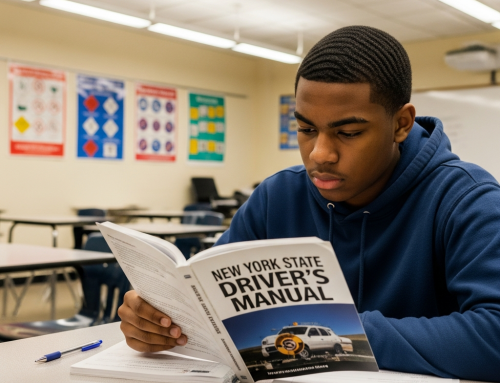
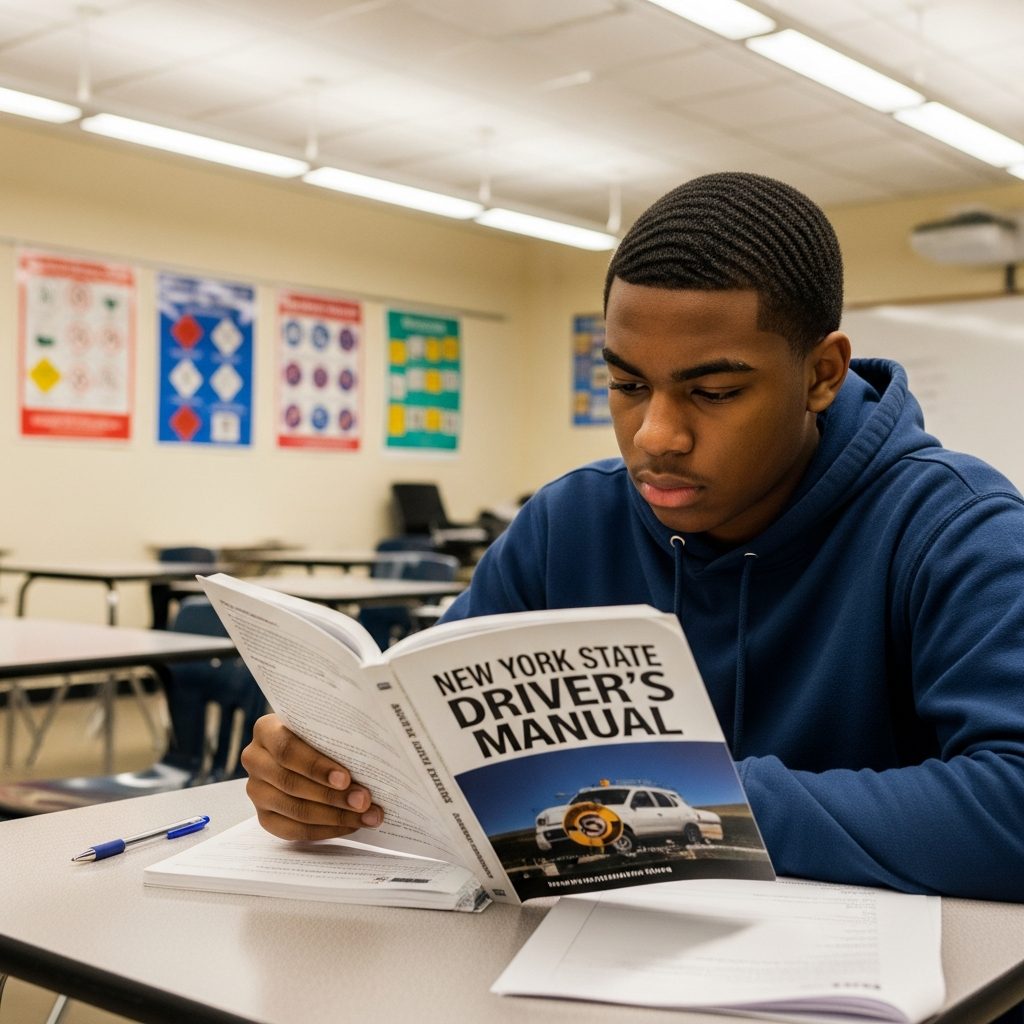
Download the New York Driver’s Manual ahead of time. Not to memorize – that would be overkill – but to flip through it. Even fifteen minutes of skimming will help you follow along better. The instructors move quickly through defensive driving techniques, and having seen the material once makes everything click faster.
Oh, and eat something substantial beforehand. Five hours is a long stretch, and most centers only give you one short break. Your brain needs fuel to process all that information about stopping distances and right-of-way rules.
What to Expect During Those Five Long Hours
The class breaks down into predictable chunks, though each instructor has their own style. You’ll start with basic traffic laws – seems obvious, right? But they dig into scenarios you probably haven’t considered. Like… what happens when you approach a green light that’s been green for a while? (Hint: start preparing to stop.)
Then comes the meat of the course: defensive driving strategies. This isn’t your typical “keep your hands at 10 and 2” lecture. They’ll walk through real accident scenarios – rear-endings at red lights, intersection crashes, highway merging disasters. The instructors often share stories from their own driving experiences, and honestly? Those anecdotes stick with you way longer than the textbook stuff.
The middle section focuses on impaired driving – alcohol, drugs, fatigue, distractions. They’ll show videos that are… well, let’s just say they’re memorable. Some students get squeamish, but the content drives home why these laws exist.
Smart Strategies for Staying Engaged
Here’s something most people don’t realize: participation actually makes the time go faster. Ask questions when you’re confused – chances are, three other people have the same question but aren’t speaking up. The instructors appreciate engagement, and it breaks up the monotony of straight lecturing.
Sit somewhere in the middle of the room, not the back corner. You’ll hear better, see the screen clearly, and won’t be tempted to zone out or check your phone. Speaking of phones – they’re usually required to be put away, so don’t plan on sneaking texts.
Take notes on anything that surprises you. Maybe it’s the exact blood alcohol limits for different license types, or the specific fines for texting while driving. These details have a way of showing up on your actual road test or permit exam later.
Making the Most of Break Time
During that precious break (usually around hour three), resist the urge to scroll social media. Instead, chat with other students about what you’ve learned so far. You’d be amazed how much clearer concepts become when you explain them to someone else.
If there’s something you didn’t quite grasp, approach the instructor during break. They’re usually happy to clarify, and you’ll avoid that awkward feeling of being lost for the remaining hours.
After the Class: Don’t Just Forget Everything
Here’s where most people mess up – they treat the certificate as the finish line. But this class actually sets you up for success on your permit test and eventual road test. Review your notes within 24 hours while everything’s still fresh.
The defensive driving techniques they taught? Start practicing them immediately, even if you’re just a passenger. Notice when drivers around you follow (or ignore) the three-second following distance rule. Observe how experienced drivers handle merging situations.
Keep your certificate somewhere safe – not crumpled in your glove compartment. You’ll need it for your permit application, and some driving schools ask to see it before scheduling lessons.
The truth is, this 5-hour class covers more practical driving knowledge than most people expect. Sure, it’s long, and yes, some parts drag… but approach it as actual preparation for becoming a safer driver, not just a bureaucratic hoop to jump through. You might be surprised by how much you actually learn.
When the Clock Feels Like It’s Moving Backwards
Let’s be honest – sitting through five hours of driving instruction isn’t exactly binge-watching your favorite Netflix series. The biggest complaint? Time moves like molasses in January. You’re thinking about lunch, your phone’s buzzing in your pocket, and the instructor’s voice starts sounding like the teacher from Charlie Brown.
Here’s what actually works: bring a small notebook and take actual notes. I know, I know – it feels like school all over again. But writing keeps your hands busy and your brain engaged. Plus, you’ll have something to reference later when you’re behind the wheel wondering “wait, what was that thing about following distance?”
The key is treating this like you’re learning something that could literally save your life… because you are.
The Information Overload Problem
Five hours of road signs, right-of-way rules, and defensive driving techniques? Your brain starts feeling like an overstuffed filing cabinet. Students often walk out feeling like they learned everything and nothing at the same time.
The trick is to focus on the big three: stopping distances (that 3-second rule isn’t just a suggestion), scanning techniques (your eyes should be moving constantly, not just staring straight ahead), and space management (creating cushions around your car like you’re wrapping a fragile package).
Don’t try to memorize every single detail. Instead, grab onto the concepts that make you think “oh, that makes sense” – those are the ones that’ll stick when you’re actually driving.
Group Dynamics and Awkward Questions
You know what nobody talks about? How weird it can feel asking questions in front of strangers. Maybe you’re 30 and feel like you should already know this stuff. Or you’re 16 and don’t want to look clueless in front of the older students.
Here’s the thing – everyone’s there for the same reason, and chances are good that if you’re confused about something, at least three other people are too. The instructors have heard every question imaginable. They’ve been asked about parallel parking anxiety, highway merging fears, and yes, even “what if I forget everything the moment I get behind the wheel?”
If you’re really shy about speaking up, jot down your questions and ask during a break. Most instructors appreciate students who care enough to ask.
The Practical Application Gap
This is the big one. You sit through hours of instruction about proper following distance, but then you get on the Long Island Expressway and everyone’s tailgating like it’s a NASCAR race. The real world doesn’t always match the textbook, and that disconnect can be frustrating.
The course teaches you the ideal – what you *should* do. Real driving means adapting those principles to actual conditions. When the instructor talks about maintaining a 3-second following distance, they’re not being naive about rush hour traffic. They’re giving you a baseline that you can adjust (slightly) when needed, while still staying safe.
Think of it as learning the recipe before you start improvising in the kitchen.
Technology Disconnect for Different Generations
If you’re over 40, some of the newer driving concepts might feel foreign. Blind spot monitoring systems, backup cameras, automatic emergency braking – the cars have changed a lot. If you’re under 25, you might be wondering why they’re spending so much time on things your car does automatically.
The reality? You need to know how to drive without the technology, because systems fail. That backup camera might malfunction, or you might find yourself driving an older car. The fundamentals they’re teaching work in any vehicle, from a 2005 Honda to a 2024 Tesla.
Making It Stick Beyond the Classroom
The real challenge isn’t getting through the five hours – it’s remembering what you learned when you’re actually driving. Your brain will be juggling so many new things that those classroom lessons can feel pretty theoretical.
Before you leave, ask the instructor for their top three takeaways. What are the most important things to remember? Write those down and keep them somewhere you’ll see them – your phone, your wallet, taped to your dashboard during practice drives.
And here’s something they probably won’t tell you: it’s okay to be nervous about driving. That nervousness? It’s actually going to make you a more careful, attentive driver than someone who thinks they know it all.
What You Can Realistically Expect on Class Day
Let’s be honest – you’re probably not going to walk out of this 5-hour class feeling like a Formula 1 driver. And that’s perfectly okay! The whole point isn’t to transform you into a driving expert in one afternoon… it’s to give you the foundational knowledge you’ll actually need when you’re behind the wheel.
Most students find the experience surprisingly manageable. Sure, five hours sounds daunting (especially if you’re picturing a stuffy classroom with uncomfortable chairs), but the time typically flies by faster than you’d expect. The instructors break things up with videos, discussions, and interactive segments. You’re not just staring at PowerPoint slides for five straight hours – thank goodness.
You’ll probably leave feeling more confident about the rules of the road, but don’t worry if you don’t remember every single detail. That’s normal! The important stuff tends to stick, and honestly, some of the finer points will make more sense once you’re actually driving and can connect the dots.
The Certificate – Your Golden Ticket
Here’s what you’re really there for: that completion certificate. You’ll get it at the end of class, assuming you stay for the full five hours and participate reasonably well. There’s no final exam to stress about, no grade you need to hit – just show up, stay awake, and engage with the material.
Keep that certificate safe! You’ll need to present it when you take your road test at the DMV. I always tell people to take a photo of it with their phone right away (you know, just in case), then store the original somewhere you won’t lose it. Maybe with your other important documents? Not stuffed in your backpack where it might get crumpled or forgotten.
The certificate doesn’t expire, which is nice. So if life gets in the way and you don’t take your road test for several months… no worries. It’s still valid.
Next Steps After Your Class
So you’ve got your certificate – now what? Well, you’re officially ready to schedule your road test at the DMV. But here’s where I need to be the voice of reason for a minute…
Don’t rush to book your test the very next day. I mean, you could, but most people benefit from some actual practice time first. The 5-hour class teaches you about driving, but it doesn’t actually teach you *how* to drive. That’s what your practice sessions with a licensed driver (or professional instructor) are for.
How much practice do you need? That really depends on you. Some people are naturals and feel confident after a few sessions. Others need weeks or even months of regular practice. There’s no shame in taking your time – better to be truly ready than to fail your test and have to retake it.
Think of it this way: the 5-hour class is like reading the recipe, but you still need to actually cook the meal a few times before you’re ready to serve it to guests.
Setting Realistic Timelines
If you’re starting completely from scratch (no previous driving experience), a realistic timeline might look something like this: Take your 5-hour class, then practice regularly for 4-8 weeks before scheduling your road test. That gives you time to get comfortable with the basics – parking, merging, parallel parking (yes, you’ll probably need to do that)…
Already have some driving experience? Maybe you learned in another state or country? You might feel ready for your test within 2-3 weeks of completing the class.
The key is being honest with yourself about your skill level. Your practice supervisor – whether that’s a family member, friend, or instructor – can help you gauge when you’re actually ready.
Managing Your Expectations
Here’s something nobody tells you: even after passing everything, you’ll still be learning for years. Getting your license isn’t the finish line – it’s more like getting permission to start the real learning process.
The drivers you see cruising confidently down the highway? They didn’t get there overnight. They got there through experience, practice, and probably a few close calls that taught them important lessons.
So take the pressure off yourself. Do the 5-hour class, practice thoughtfully, take your test when you’re ready… and then keep learning. You’ve got this – just don’t expect perfection right out of the gate. Nobody does.
Ready to Take the Wheel?
You know, when I first heard about this five-hour requirement, I thought it sounded like torture – sitting in a classroom for that long, listening to someone drone on about traffic laws? But here’s the thing… it’s actually designed to save lives. Your life, specifically.
Think of it this way – you’re not just checking off a box for the DMV. You’re investing in yourself, in your confidence behind the wheel, and honestly? In your future. Those hours spent learning about defensive driving techniques, understanding how alcohol affects your reflexes, and practicing hazard recognition – they’re like a toolkit you’ll carry with you every single time you start the engine.
I’ve seen too many people rush through this process, treating it like an annoying hurdle to jump over. But the students who really engage with the material? They’re the ones who tell me later how something they learned in that classroom actually helped them avoid an accident. That’s not dramatic – that’s real.
The beauty of New York’s approach is that it’s comprehensive without being overwhelming. Sure, five hours feels long when you’re eager to get your license, but compared to learning these lessons the hard way on actual roads… well, there’s really no comparison. Plus, you’ll walk out with that certificate feeling genuinely prepared, not just paperwork-ready.
And let’s be honest – driving in New York isn’t exactly a leisurely Sunday drive through the countryside. Between aggressive drivers, unpredictable weather, and roads that seem to have their own personality (and not always a friendly one), you want every advantage you can get. This class gives you that edge.
The interactive elements make time pass faster than you’d expect, too. When you’re actually discussing real scenarios with other students, sharing experiences, and working through those situational exercises… it stops feeling like school and starts feeling like preparation for something important. Which, of course, it is.
I love that the instructors focus so much on the practical stuff – not just the rules, but the why behind them. Understanding the reasoning makes everything stick better. It’s like the difference between memorizing a recipe and actually understanding how to cook, you know?
One thing that really stands out is how the course adapts to different learning styles. Whether you’re someone who learns best through discussion, visual aids, or hands-on activities, there’s something in there for you. The DMV really thought this through.
Here’s what I want you to remember: this isn’t just about getting your license – it’s about becoming the kind of driver who makes smart decisions, stays alert, and gets everyone home safely. That’s a responsibility worth taking seriously.
If you’re feeling anxious about signing up, or if you have questions about what to expect, don’t hesitate to reach out. Sometimes talking through your concerns with someone who understands can make all the difference. We’re here to support you through this process – not just to get you certified, but to help you feel truly confident and prepared.
You’ve got this. And we’ve got you.