What Parents Should Know About the 5 Hour Driving Course

Your teenager just got their learner’s permit, and suddenly you’re that parent – you know, the one with white knuckles gripping the passenger seat handle while your kid attempts to parallel park for the fifteenth time. “Mom, I got this!” they insist, as they reverse into what appears to be another dimension entirely.
Sound familiar?
Here’s the thing about teaching your teen to drive… it’s basically like trying to explain calculus while riding a roller coaster. You’re managing your own anxiety (because holy moly, when did they get so tall that they can actually reach the pedals?), while simultaneously trying to be the calm, encouraging instructor they need. And let’s be honest – most of us learned to drive from our parents or relatives, which means we’re passing down decades-old habits that maybe… weren’t exactly by-the-book.
That’s where professional driving instruction comes in, and specifically, something you might not have heard much about: the 5-hour driving course.
Now, before your eyes glaze over thinking this is just another bureaucratic hoop to jump through – stick with me here. This isn’t your typical driver’s ed situation. We’re talking about a focused, intensive program that could genuinely change how your teen approaches driving. And more importantly? How confident you feel when you hand over those car keys for the first time.
I’ll be straight with you… when I first heard about 5-hour driving courses, my initial thought was “Great, another thing to add to the already overwhelming list of teen requirements.” Between college prep, extracurriculars, part-time jobs, and everything else our kids are juggling these days, who has time for more classes?
But here’s what I’ve learned after talking to countless parents (and a few brave driving instructors): this particular program might actually save you time, money, and quite possibly your sanity. Think of it as the difference between letting your teen figure out cooking by randomly throwing ingredients together versus teaching them a few essential techniques that’ll serve them for life.
The reality is, most of us parents are… let’s call it “creatively qualified” to teach driving. Sure, we’ve been doing it for years, but that doesn’t necessarily mean we’re doing it right. I know I have a tendency to slam my foot on an imaginary brake pedal whenever my daughter takes a turn a little too enthusiastically. Not exactly helpful for building her confidence, right?
Professional instructors, on the other hand – they’ve seen it all. The kid who thinks speed limits are suggestions. The one who treats the steering wheel like it’s made of glass. The teen who’s convinced they can text and drive simultaneously because they’re “really good at multitasking.” These instructors know exactly how to address each personality type, each fear, each overconfident moment.
What we’re going to explore together is everything you need to know about these 5-hour courses – and trust me, there’s more to consider than you might think. We’ll talk about whether your state actually requires it (spoiler alert: the rules are all over the place), what happens during those five hours, and how much you should expect to pay.
More importantly, we’ll dig into the real question on every parent’s mind: is this actually worth it? Does five hours of professional instruction really make a difference, or is this just driving schools trying to make an extra buck off anxious parents?
I’ll share what other parents have told me – both the success stories and the “meh, we probably could’ve skipped it” experiences. Because let’s face it, every teen is different, and what works for your neighbor’s responsible 16-year-old might not be the right fit for your kid who still occasionally forgets to put on shoes before leaving the house.
By the time we’re done here, you’ll know exactly whether a 5-hour driving course makes sense for your family, how to find a good one if you decide to move forward, and what questions to ask to make sure you’re getting your money’s worth.
Because ultimately? This is about more than just driving. It’s about giving your teen the tools they need to be safe, confident drivers – and giving yourself a little peace of mind when they finally do take the car out on their own.
What Actually Happens in Those Five Hours
Look, I’ll be honest – when I first heard about the five-hour driving course, I pictured kids slumped in uncomfortable chairs while some instructor droned on about stop signs for an entire workday. Turns out… well, I wasn’t entirely wrong about the uncomfortable chairs, but there’s actually a method to this madness.
Think of it like this: if learning to drive were like learning to swim, the five-hour course would be the part where you learn about water safety, pool rules, and why you shouldn’t run on wet concrete – all before you ever get in the pool. It’s the foundation work that (hopefully) keeps your teenager from making the kind of mistakes that end up on those dashboard camera compilation videos.
The course covers everything from basic traffic laws to defensive driving techniques. But here’s where it gets interesting – and honestly, a bit counterintuitive. Your teen will spend five hours learning about scenarios they’ve never actually experienced behind the wheel. It’s like trying to explain what chocolate tastes like to someone who’s never had sugar. The concepts might not fully click until they’re actually white-knuckling the steering wheel in real traffic.
Who Needs This Course (And When)
This is where things get a little bureaucratic – sorry, but someone had to make rules, right? In most states that require it, the five-hour course is mandatory for new drivers under 18. It’s typically completed before or alongside the actual road test, though the exact timing varies by state.
Here’s what caught me off guard: some states require the course even if your teen has already been driving with a learner’s permit for months. I know, I know – it seems backwards. Your kid might be perfectly capable of parallel parking (okay, let’s be realistic… somewhat capable), but they still need to sit through this classroom time. Think of it as the state’s way of saying, “We trust you’ve learned the mechanics, but let’s make sure you understand the rules of the road.”
The age cutoff usually hovers around 18, though some states extend it to 19 or even 21 for new drivers. And yes, that means a 20-year-old getting their first license might be sitting next to a 16-year-old in the same class. It’s… an interesting dynamic.
The Real Purpose Behind the Classroom Time
You might wonder why we can’t just skip straight to the practical stuff – after all, driving is a hands-on skill, right? Well, here’s the thing: driving isn’t just about operating a machine. It’s about making split-second decisions in situations where other people’s lives are literally in your hands.
The five-hour course tries to fill in gaps that even the best driving instructors can’t cover during road lessons. When you’re learning to drive with an instructor, you’re focused on the basics – don’t hit that parked car, remember to signal, for the love of all that’s holy please check your blind spot. But the classroom time? That’s where they can talk through scenarios like “What do you do when you see a school bus with flashing lights?” without anyone actually having to encounter a school bus full of kids.
It’s also where they cover the less glamorous but critically important stuff – like understanding right-of-way rules (which, let’s face it, even some experienced drivers get wrong) and recognizing impaired drivers on the road.
Making Sense of the Structure
Most five-hour courses break down into digestible chunks rather than one marathon session. Thank goodness – because honestly, who learns anything useful in hour four of a five-hour lecture about traffic signals?
The typical structure includes modules on traffic laws, defensive driving, and what instructors love to call “risk awareness.” That last one is basically code for “here are all the ways other drivers might try to kill you, and how to avoid them.” Cheerful stuff, but genuinely important.
Some courses include interactive elements – videos, group discussions, even basic simulations. Others… well, let’s just say they lean heavily on PowerPoint presentations that haven’t been updated since flip phones were cool. The quality varies pretty dramatically, which is something worth researching when you’re choosing where your teen takes the course.
The whole thing wraps up with a certificate that your teen will need to present at the DMV. Pro tip: don’t lose this piece of paper. Getting a replacement is about as fun as… well, as sitting through another five-hour driving course.
Making the Investment Worth Every Penny
Here’s what nobody tells you upfront – the cheapest driving school isn’t always the best deal, but the most expensive one isn’t necessarily worth it either. You want to look for schools that offer package deals… actually, let me back up. Most parents I talk to get so focused on price that they miss the real value indicators.
Look for instructors who’ve been teaching for at least five years (trust me on this one), schools with actual brick-and-mortar locations, and programs that include both classroom time and behind-the-wheel practice. The magic combo? Schools that offer evening or weekend slots – because let’s be honest, pulling your teen out of school for driver’s ed creates more drama than it’s worth.
Timing That Actually Works for Your Family
You know that sweet spot when your teen just turned 15? Don’t jump the gun. I’ve watched countless families rush into the five-hour course only to realize their kid wasn’t emotionally ready to handle a car yet.
The course is valid for a full year, so there’s breathing room here. Consider waiting until your teen shows genuine responsibility in other areas – keeping track of their phone, remembering homework without constant reminders, that sort of thing. Cars are basically 3,000-pound responsibility tests.
Spring and early summer work best for most families. Your teen finishes the course, gets comfortable with the material, and then has months to practice before winter driving becomes a factor. Plus, driving schools aren’t as crowded during these months, which means more personalized attention.
What to Pack (Beyond the Obvious)
Every school will tell you to bring identification and payment. What they don’t mention? Pack snacks. Seriously. Five hours is a long stretch, especially for teenagers whose blood sugar crashes faster than their attention spans.
Bring a notebook – not for the teen, but for you as the parent. The instructor will drop golden nuggets of wisdom about teaching techniques, common mistakes, and local driving quirks that you’ll want to remember later. I always recommend parents attend the first 30 minutes if the school allows it.
Your teen should bring their learner’s permit (if they have it) and comfortable clothes. Those plastic classroom chairs get uncomfortable fast, and the last thing you want is a fidgety teenager during the defensive driving portion.
Working with Your Teen’s Learning Style
Here’s where things get interesting… Some kids absorb everything through listening, others need visual aids, and some (the kinesthetic learners) literally need to touch and move things to understand concepts.
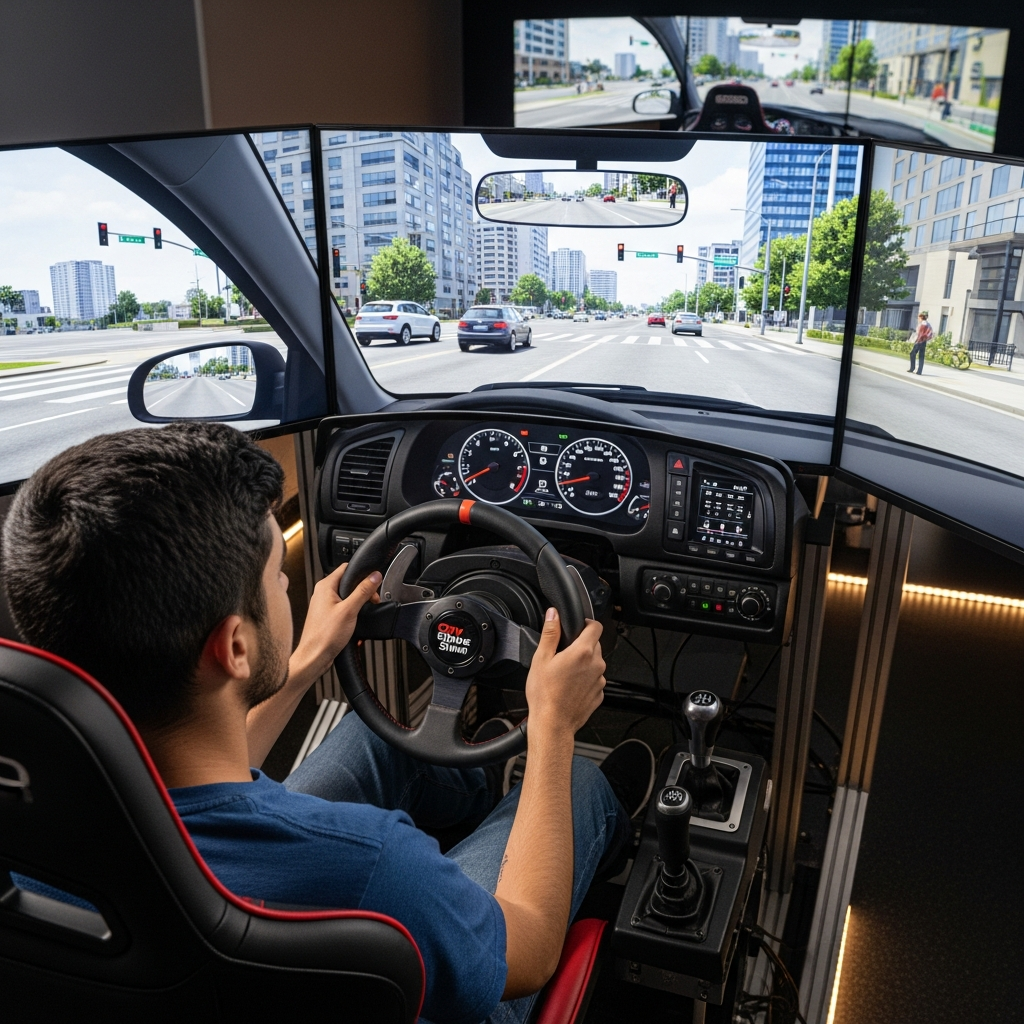
If your teen struggles with traditional classroom settings, call ahead and ask about the instructor’s teaching methods. The best driving schools adapt their approach – using driving simulators for hands-on learners, plenty of videos for visual processors, and interactive discussions for auditory learners.
Also? Don’t schedule the course during your teen’s worst time of day. If they’re night owls, that 8 AM Saturday class is setting everyone up for failure. Most schools offer multiple time slots – use this to your advantage.
Follow-Up Strategies That Actually Stick
The course ends, your teen gets their certificate, and then… nothing happens for months. This is where most families drop the ball.
Create a practice schedule within two weeks of completing the course. The information is fresh, their confidence is up, and you’re more likely to get buy-in. Start with 20-minute sessions in empty parking lots – grocery stores after hours work perfectly.
Keep the course materials handy. I can’t tell you how many times parents call me months later asking about specific rules their teen “forgot.” Those handouts aren’t just paperwork – they’re your reference guide for the next year.
Consider enrolling in a behind-the-wheel program within 30 days of the classroom course. The skills complement each other, and many schools offer discounts when you bundle them together.
Red Flags You Shouldn’t Ignore
If the instructor spends more time on their phone than teaching, if other students are clearly disruptive without consequences, or if the facility feels sketchy – trust your instincts and find another school.
Quality instructors make the course interactive, address individual questions, and create an environment where teens feel comfortable asking “stupid” questions. Because when it comes to driving… there really aren’t any stupid questions, just potentially dangerous assumptions.
The best programs feel challenging but not overwhelming, informative but not boring. Your teen should leave feeling more confident about driving, not more anxious about it.
When Your Teen Just Can’t Get It (And That’s Normal)
Look, I’m going to be real with you – some kids pick up driving like they were born behind the wheel, and others… well, others make you question whether they’ll ever safely navigate a parking lot. If your teen falls into that second category, you’re not alone, and more importantly, you’re not doomed to a lifetime of being their personal chauffeur.
The biggest challenge I see? Overwhelm. Five hours might sound manageable, but when you’re 16 and trying to coordinate your feet, hands, eyes, and brain all at once while hurtling down the road in a 2,000-pound machine… it’s a lot. Some kids shut down completely by hour three. They’ll sit there, white-knuckling the steering wheel, while the instructor repeats the same parking instructions for the tenth time.
Here’s what actually helps: break it up. Most programs let you split those five hours across multiple days – and honestly, that’s usually the smarter move. Your teen’s brain needs time to process what they’ve learned. Think of it like learning piano… you wouldn’t try to master Mozart in one marathon session, right?
The Confidence Crash (It’s Coming)
There’s this moment – usually somewhere around hour two or three – where reality hits. Your previously cocky teenager realizes that driving isn’t just about pressing the gas and turning the wheel. They might’ve been fine during the first lesson, but suddenly parallel parking seems impossible, and don’t even get me started on left turns at busy intersections.
I’ve watched kids go from “I’ve got this” to tears of frustration faster than you can say “three-point turn.” And you know what? That’s completely normal. Actually, it’s good – it means they’re taking it seriously.
The solution isn’t cheerleading or telling them they’re doing great when they’re clearly struggling. Instead, acknowledge that it’s hard. “Yeah, this is tricky stuff. Even adults find parallel parking annoying.” Then remind them that literally every driver they see on the road went through this exact same learning curve. Some just hide it better.
When the Instructor Isn’t the Right Fit
Here’s something driving schools don’t advertise: not every instructor clicks with every student. Maybe your quiet kid gets overwhelmed by an overly enthusiastic teacher, or your anxious teen needs someone more patient than the instructor they’ve been assigned.
You’re paying for this service – you can absolutely request a different instructor. Don’t feel bad about it. I’ve seen kids who were ready to quit driving altogether flourish with a different teaching style. Some teens need firm direction, others need gentle encouragement. Some learn better with lots of talking, others need quiet focus.
If your teen comes home from a lesson upset or more anxious than when they left, have a conversation. What specifically felt overwhelming? Was it the instructor’s approach, the material, or just the general difficulty? You might be able to solve it with a simple phone call to the driving school.
The Perfectionist Problem
Some kids – often the straight-A students – struggle because they expect to master everything immediately. They get frustrated when they can’t execute a perfect merge on their second try, or when they still feel nervous about checking blind spots.
For these kids, the five-hour format can actually backfire. They put so much pressure on themselves to “get it right” during those precious hours that they tense up and make more mistakes.
The reality check these teens need? Driving is a skill that takes months (sometimes years) to feel truly comfortable with. The five-hour course isn’t meant to turn them into expert drivers – it’s meant to teach them the basics safely. They’ll continue learning for months after they get their license, and that’s exactly how it should be.
Making the Most of Limited Time
Five hours goes by fast, especially when half of the first hour is spent adjusting mirrors and explaining basic controls. To maximize the experience, make sure your teen has already spent time in an actual car with you, even if it’s just sitting in the driveway getting familiar with the controls.
Also – and this might sound obvious but you’d be surprised – make sure they’re well-rested and fed before each lesson. A hungry, tired teenager isn’t going to retain much, and you’ll essentially be throwing money away.
The bottom line? Expect some bumps along the way. Your teen might love it, hate it, or feel completely overwhelmed by it. All of those reactions are normal, and none of them predict whether they’ll become a good driver eventually.
What to Expect During Those Five Hours
Let’s be honest – five hours sounds like a lot when you’re sitting in the passenger seat, but it goes by surprisingly fast. Most driving schools break this into manageable chunks, usually 2-3 sessions spread over a week or two. Your teen isn’t going to transform from nervous beginner to highway hero overnight, and that’s perfectly normal.
During the first session, expect your instructor to spend time just… talking. They’re assessing your teen’s comfort level, explaining the basics of the vehicle, and setting expectations. Don’t worry if your kid seems overwhelmed – most teens are. The instructor has seen it all before, from the overly confident ones who think they know everything to the anxious ones who grip the steering wheel like they’re holding on for dear life.
You’ll probably notice your teen comes home after each session with a mix of excitement and exhaustion. Learning to coordinate all those moving parts – steering, braking, checking mirrors, watching for pedestrians – it’s like learning to juggle while riding a bike. Their brain is working overtime, so don’t be surprised if they’re a bit cranky or want to decompress.
The Reality Check: Progress Isn’t Always Linear
Here’s what no one tells you upfront – your teen might seem worse after the second lesson than the first. I know, I know, you’re paying good money for this. But it’s actually a good sign. They’re becoming more aware of everything they need to watch for, which can initially make them more nervous, not less.
Some days they’ll nail parallel parking, other days they’ll forget to signal a simple turn. That’s the learning process, not a reflection of the instructor’s abilities or your teen’s intelligence. Professional instructors expect this ebb and flow – they’ve got strategies for when confidence dips and techniques for building on small victories.
The five-hour course focuses heavily on defensive driving techniques and hazard recognition. Your teen will learn things you might have forgotten over the years… like the proper following distance (it’s not just “stay back a little”) or how to scan intersections effectively. They’ll practice maneuvers you probably don’t think about anymore but are crucial for new drivers.
After the Course: The Real Work Begins
Once those five hours wrap up, your teen gets a completion certificate – but let’s manage expectations here. This certificate doesn’t mean they’re ready to borrow your car for a cross-state road trip. It means they’ve completed a foundational course that, combined with your state’s other requirements, helps them become a safer driver.
Think of the five-hour course as… well, like learning to swim in a pool before heading to the ocean. Important? Absolutely. The whole story? Not quite.
Now comes the part where you really earn your parenting stripes – supervised practice time. Most states require 50+ hours of supervised driving (including night driving), and honestly? That’s probably not even enough. Your teen needs time to internalize what they learned, to practice in different weather conditions, various traffic situations, and yes… to make mistakes in a safe environment.
Planning Your Next Steps
Schedule the road test thoughtfully – don’t rush it just because you want to check this box off your parental to-do list. Most teens benefit from 2-3 months of regular practice after completing their five-hour course. That might sound like a long time, but remember – they’re learning a skill they’ll use for the rest of their lives.
During this practice period, focus on scenarios the five-hour course might not have covered extensively. Highway merging, parking in tight spaces, navigating construction zones… these real-world situations build the confidence and judgment that no classroom can fully provide.
Actually, that reminds me – keep a driving log during practice sessions. Many states require it anyway, but beyond the legal requirement, it helps you track progress and identify areas that need more work. Maybe your teen nails city driving but gets nervous on highways, or they’re great in daylight but struggle with night visibility.
Setting Realistic Timelines
If your teen just turned 16, they’re probably eager to get their license ASAP. But there’s wisdom in not rushing this process. The insurance industry has decades of data showing that more practice time correlates with fewer accidents – and lower premiums for you.
Consider scheduling the road test for 6-8 weeks after the five-hour course completion. This gives enough time for meaningful practice without letting skills get rusty. Some families find success scheduling the test right after a school break when teens can dedicate focused time to practicing without homework stress.
Remember – your teen’s safety is worth more than their social schedule.
You know what? Teaching your teenager to drive safely isn’t something you have to figure out alone – and honestly, you shouldn’t have to.
The five-hour course is really just the beginning of what will likely be months (maybe even a year or more) of learning, practice, and… let’s be honest… some white-knuckle moments in the passenger seat. But here’s the thing that might surprise you: this process doesn’t have to feel overwhelming or scary.
Think of it like teaching your child to ride a bike. Remember that? You probably started with training wheels, then held onto the back of the seat while they wobbled forward, and eventually – maybe after a few scraped knees – they were pedaling confidently on their own. Driving is similar, except the stakes feel higher because, well… they are.
The course gives your teen the foundation – the rules of the road, basic safety principles, awareness of risks they might not even consider yet. But what happens after that five-hour certificate is in hand? That’s where you come in. You’re not just the person providing the car keys; you’re their most important driving mentor.
Some parents worry they’re not qualified to teach driving skills. “What if I miss something important?” “What if I’m too nervous?” “What if we just end up arguing?” These concerns are completely normal. Actually, they show you’re taking this responsibility seriously.
But here’s what we’ve learned from working with hundreds of families: you don’t need to be a professional driving instructor to help your teen become a safe driver. You just need patience, consistency, and a willingness to let them practice – really practice – in different conditions and situations.
The course covers the basics, but real learning happens during those evening drives to the grocery store, those weekend trips to visit grandparents, those inevitable moments when it starts raining unexpectedly or when they need to parallel park in front of their friends. (Yes, that will happen, and yes, it might be mortifying for everyone involved.)
Your teen’s safety matters more than anything else – but so does your peace of mind. You shouldn’t have to lie awake at night wondering if you’ve prepared them well enough, or if there’s something crucial you’ve forgotten to teach them.
Sometimes families need extra support beyond what the basic course provides. Maybe your teen is particularly anxious behind the wheel, or maybe you’re dealing with specific challenges like ADHD or learning differences. Maybe you just want professional guidance to supplement your own teaching. That’s not a sign of failure – it’s smart parenting.
If you’re feeling uncertain about any part of this process, or if you’d like additional resources to help your teen develop confident, safe driving habits, we’re here to help. Our team understands both the practical aspects of driver education and the emotional side of watching your child take this huge step toward independence.
You don’t have to navigate this alone. Reach out to us – whether you have specific questions about the course requirements, want guidance on practice schedules, or just need someone to talk through your concerns. We’ve been where you are, and we’re genuinely here to support your family through this milestone.