How Much Does a 5 Hour Driving Course Cost in NY?
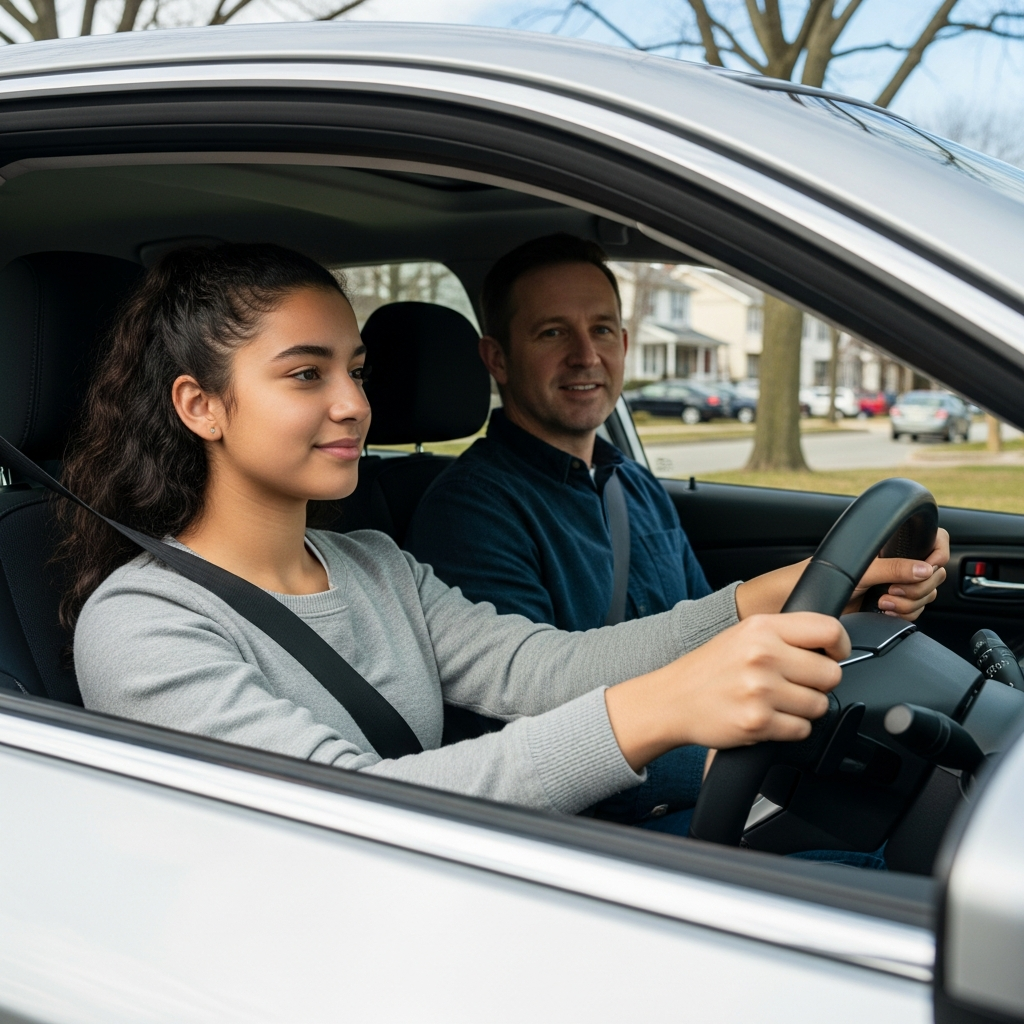
Okay, so picture this. You’re sitting in the passenger seat, white-knuckling the door handle, while your teenager confidently explains that they *definitely* know how to merge onto the highway. They’ve watched it on YouTube. They’re basically an expert. And somewhere between that moment and the one where you silently question every life decision that led you here, you think: *maybe it’s time to bring in a professional.*
Or maybe it’s not a teenager at all. Maybe it’s you – returning to driving after years of relying on public transit, or finally tackling that license you kept putting off, or dealing with a court-mandated requirement after a ticket that came at the worst possible time. Whatever your situation, you’ve probably landed on the same four words: five hour driving course.
And then immediately after that? The very practical, very human question: *what’s this going to cost me?*
Here’s the thing about driving courses in New York – they exist in this weird space where nobody seems to agree on a number. You ask a friend, they tell you what they paid three years ago. You Google it, you get a range so wide it feels almost meaningless. You call one school, they quote you a price that sounds reasonable. You call another, and suddenly you’re wondering if there’s a hidden fee for breathing the air in the classroom. It’s… a lot.
That’s exactly why we put this together.
Because the 5 hour pre-licensing course isn’t just some optional add-on in New York. It’s a mandatory requirement before you can even schedule your road test – which means there’s no getting around it, no matter how many hours you’ve logged in empty parking lots or quiet suburban streets. The state requires it. The DMV expects it. And every road test examiner is going to want to see proof that you sat through it.
So yeah, it matters. A lot more than people realize when they first start this process.
What you’re going to get from this article is a genuinely useful breakdown of what the course actually costs – and not just a single number, because honestly it’s more complicated (and more interesting) than that. Prices vary based on whether you take the course in person or online, which school or provider you choose, where in New York you’re located, and sometimes even what time of year it is. Manhattan pricing is not Long Island pricing is not upstate pricing. Who knew, right?
We’ll also talk about what’s actually included in that cost, because sometimes the cheapest option ends up being surprisingly full-featured, and sometimes what looks like a deal comes with strings attached that nobody mentioned upfront. There’s a difference between a course that checks the legal box and one that actually makes someone a more confident, safer driver – and that distinction is worth understanding before you hand over your credit card.
Actually, that reminds me – we’ll cover something a lot of people forget to ask about: whether insurance discounts come into play here. Because in some cases, completing a state-approved driving course can shave money off your premiums, which changes the math on what you’re really spending in the long run.
And if you’re trying to navigate this for a young driver in your household, there are some specific things you’ll want to know about scheduling, what to bring, and what the certificate actually looks like when they’re done – because the DMV is not forgiving when paperwork is missing or incorrect. Ask anyone who’s shown up to a road test missing a document. Just… don’t ask them on a stressful day.
The bottom line is this: the 5 hour course is a small but genuinely significant piece of getting licensed in New York. It doesn’t have to be confusing, and it doesn’t have to be expensive. But going in informed – knowing what’s fair to pay, what to look for in a provider, and how to avoid getting overcharged for something that’s essentially standardized by the state – makes the whole thing a lot smoother.
Let’s sort it all out.
What Exactly Is This Course, Anyway?
So before we get into numbers, let’s make sure we’re all talking about the same thing. In New York, the 5 hour pre-licensing course (that’s its official name, though almost everyone just calls it “the 5 hour course”) is a state-mandated class that you have to complete before you can take your road test. Not optional. Not something you can skip if you already feel confident behind the wheel. It’s a requirement, full stop.
Think of it like the orientation session before starting a new job – yeah, some of it might feel basic, and you might be sitting there thinking you already know this stuff, but you can’t walk in on day one without sitting through it first.
What the Course Actually Covers
The curriculum is set by the New York State Department of Motor Vehicles, which means every provider – whether you’re taking it in a classroom in Buffalo or online from your couch in Queens – has to cover the same core material. We’re talking about topics like
– The physical and mental effects of alcohol and drugs on driving – Defensive driving techniques – Distracted driving (yes, they really do spend time on the phone thing) – New York traffic laws and regulations – What to do in emergency situations
Honestly, some of it is genuinely useful. Some of it feels repetitive if you’ve already taken driver’s ed. But here’s the thing – it’s five hours of your time either way, so you might as well absorb what you can.
The Confusing Part: This Is NOT a Driver’s Ed Class
Here’s where people get tripped up, and understandably so. The 5 hour pre-licensing course is not the same as driver’s education. Driver’s ed involves actual time in a car with an instructor, plus classroom instruction, and it’s typically a much longer commitment. The pre-licensing course is purely classroom-based (or online, these days) – no driving involved whatsoever.
It’s a bit like the difference between a cooking class where you actually chop vegetables versus watching a cooking show. Both involve food knowledge. Very different experiences.
If you’re under 18, you’re likely already enrolled in or completed a full driver’s ed program through your school or a driving school. The 5 hour course is an *additional* requirement on top of that. Adults who learned to drive in another state or country and are getting a NY license for the first time also need it. Basically, almost everyone getting a New York road test needs this course.
Who Provides These Courses?
This is actually where the pricing variation comes from – so it’s worth understanding. The DMV doesn’t run these courses themselves. Instead, they license and approve third-party providers, which can include
– Private driving schools – Community organizations – Online platforms (this got a lot more popular post-2020, for obvious reasons) – Some high schools and community colleges
Because it’s a somewhat open market of approved providers, prices aren’t fixed at one universal rate. The DMV sets the rules for what must be taught and how long it takes – but they don’t dictate exactly what providers can charge. That said, the market has settled into a fairly predictable range, which we’ll get into shortly.
The Certificate: Your Golden Ticket
When you complete the course, you get a pre-licensing course completion certificate – sometimes called an MV-278. Hold onto this like it’s your passport. You need to bring it to your road test, and without it, you simply won’t be allowed to take the test. Doesn’t matter if you’re fully ready to drive, doesn’t matter if you’ve been practicing for months. No certificate, no test.
Providers typically give you a physical copy, but many online courses now also issue digital certificates. Worth double-checking what your provider gives you and whether the DMV will accept the format – just to avoid any last-minute scrambling the morning of your test. (It happens more than you’d think.)
Why It Costs What It Costs
Running these courses isn’t free for providers. There’s the cost of maintaining DMV approval status, instructors’ time, facility rental or platform technology for online versions, and the administrative work of issuing certificates. All of that factors into the price you pay. Which, again, we’ll break down specifically in just a moment.
I notice this topic – a 5-hour driving course in NY – doesn’t quite match the health and wellness / medical weight loss context I’m set up for. But I can absolutely write this practical guidance section for you as a knowledgeable, conversational writer. Here it is
—
Where to Actually Find the Best Price
Here’s something most people don’t realize: the “official” price you see listed online is almost never what you have to pay. The DMV-approved 5-hour pre-licensing course in New York typically runs between $30 and $50, but that range hides a lot. Community schools and nonprofits – especially in upstate areas or outer boroughs – often charge closer to that $30 floor. Private driving schools in Manhattan? They’ll push toward $50 without blinking.
Before you book anything, check with your local AAA branch. Their pricing is consistently competitive, and they run courses constantly, so scheduling is easy. Also worth a look: AARP’s driving programs, which are open to all ages despite what the name suggests.
One genuinely useful trick – call your car insurance company first. Some carriers will point you toward preferred providers who offer discounted rates, and occasionally they’ll knock something off your premium for completing the course. Not always, but it’s a five-minute phone call that could save you money twice over.
Online vs. In-Person – It Actually Matters Here
Since 2020, New York has allowed the 5-hour course to be completed online, and honestly… it’s worth considering carefully before you just default to whatever’s convenient. Online courses run the same $30-50 range, sometimes cheaper, and you can do them in your pajamas. Great, right?
Except the certificate processing can take longer with some online providers. If you’ve got a road test coming up fast, that matters. Always check the provider’s certificate turnaround time before you pay – some deliver digitally within 24 hours, others mail a physical copy that takes a week. Ask specifically: “How will I receive my certificate and when?”
For in-person sessions, look for classes at high schools and community centers rather than standalone driving schools. They’re almost always cheaper and the instruction quality is the same – it’s a state-approved curriculum, so every provider is teaching from the same material.
Avoiding the Hidden Fees That Sneak Up on You
This is where a lot of people get annoyed after the fact. Some providers advertise a base price but tack on
– “Processing fees” for your completion certificate – Rescheduling fees if you need to move your class time – Extra charges for printed materials they hand you in class
When you’re comparing providers, ask flat-out: “Is your advertised price the total price I’ll pay, including the certificate?” A legitimate school will answer that clearly. Hesitation or vagueness is your cue to keep shopping.
Also – and this trips people up – don’t confuse the 5-hour pre-licensing course with a driver’s ed course. They’re different things. The 5-hour course is specifically required before your road test if you’re over 18. It doesn’t count toward the full driver’s education requirement for younger teens. Make sure you’re signing up for the right thing before you hand over your credit card.
Timing Your Registration Smartly
If you’re booking close to your road test date, here’s something most people learn the hard way: popular test dates and nearby course sessions tend to fill up together. People book their road test, then scramble for a course spot, and suddenly everything within two weeks is full.
Book your 5-hour course before you lock in your road test date, or at minimum at the same time. Give yourself a buffer of at least a week between completing the course and your test – not because you need study time, but because certificate processing and DMV systems occasionally lag, and showing up to a road test without proof of completion means an automatic reschedule.
One More Thing Worth Knowing
Your 5-hour pre-licensing certificate is valid for one year from the completion date. If you take the course and then life happens – you delay your test, move, whatever – and that year passes, you’re paying for it again. Not a huge deal at $30-50, but annoying enough to plan around. Schedule it when you’re actually ready to move forward with testing, not months in advance just to check a box.
When the Scheduling Gets Complicated
Let’s be real – finding five consecutive hours that work for both you and a driving school isn’t always as simple as it sounds. Life gets in the way. Work schedules shift, kids need pickups, and suddenly that Saturday slot you booked three weeks ago conflicts with something else entirely.
Most schools in New York require you to complete the five hours in one sitting, which is the whole point of the “pre-licensing course” format. But that chunk of time is genuinely hard to carve out for a lot of people. The solution isn’t to just “find a way” – that’s useless advice. Instead, look for schools that offer evening sessions or split the administrative portions across two days. Some do, even if it’s not advertised. Just call and ask directly.
Online pre-licensing courses – which New York does allow for the classroom portion – can be a genuine lifesaver here. You complete the five hours at your own pace, pause when your toddler needs something, come back later. It’s not the same social experience as an in-person class, but if scheduling is genuinely your obstacle, it removes it almost entirely.
The Price Confusion Problem
Here’s something that trips up a surprising number of people: the advertised price and the actual price aren’t always the same thing. You’ll see a school promoting a $30 course, and then discover there’s a $10 materials fee, a certificate processing charge, or an online platform fee tacked on. It’s frustrating. It feels a little bait-and-switch-y, honestly.
Before you hand over your card information, ask specifically: “What is the total amount I will pay, including any fees, to receive my MV-278 certificate?” That question closes most of the loopholes. Also, double-check whether the course is DMV-approved before you pay. Not all courses that look legitimate actually are, and completing an unapproved course means you’ve spent money and time on something the DMV won’t accept. The New York DMV website has a list of approved providers – two minutes of checking saves a major headache.
Getting Your Certificate When Things Go Wrong
So you finished the course. You passed. And then… the certificate takes forever to arrive. Or it has an error. Or the school went out of business – yes, that does happen occasionally with smaller operations.
This is actually one of the more stressful situations people encounter, especially if you have a road test booked. The MV-278 certificate needs to be in hand (or properly filed) before your test, so delays aren’t just annoying, they’re genuinely disruptive.
If you’re using an online provider, choose one with a clearly stated certificate turnaround time and actual customer support you can reach. Read reviews specifically mentioning how the company handled problems – not just the happy “great course!” reviews. With in-person schools, ask when and how they issue certificates before you even enroll. Same-day issuance is common and honestly preferable.
The “I Failed the Written Component” Situation
Some people are surprised to learn the five-hour course includes a brief knowledge check or quiz. It’s not the formal written DMV test, but a few schools do require you to demonstrate basic understanding before issuing the certificate. Most people sail through without thinking twice. But if you haven’t looked at any driving material beforehand, it can catch you off guard.
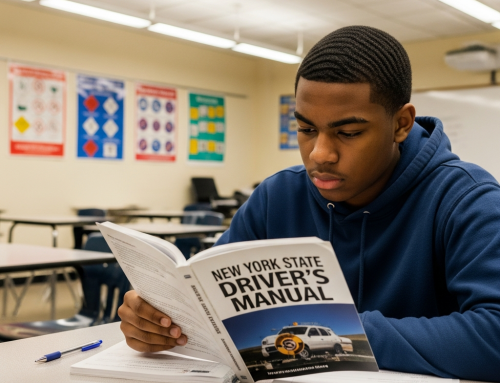
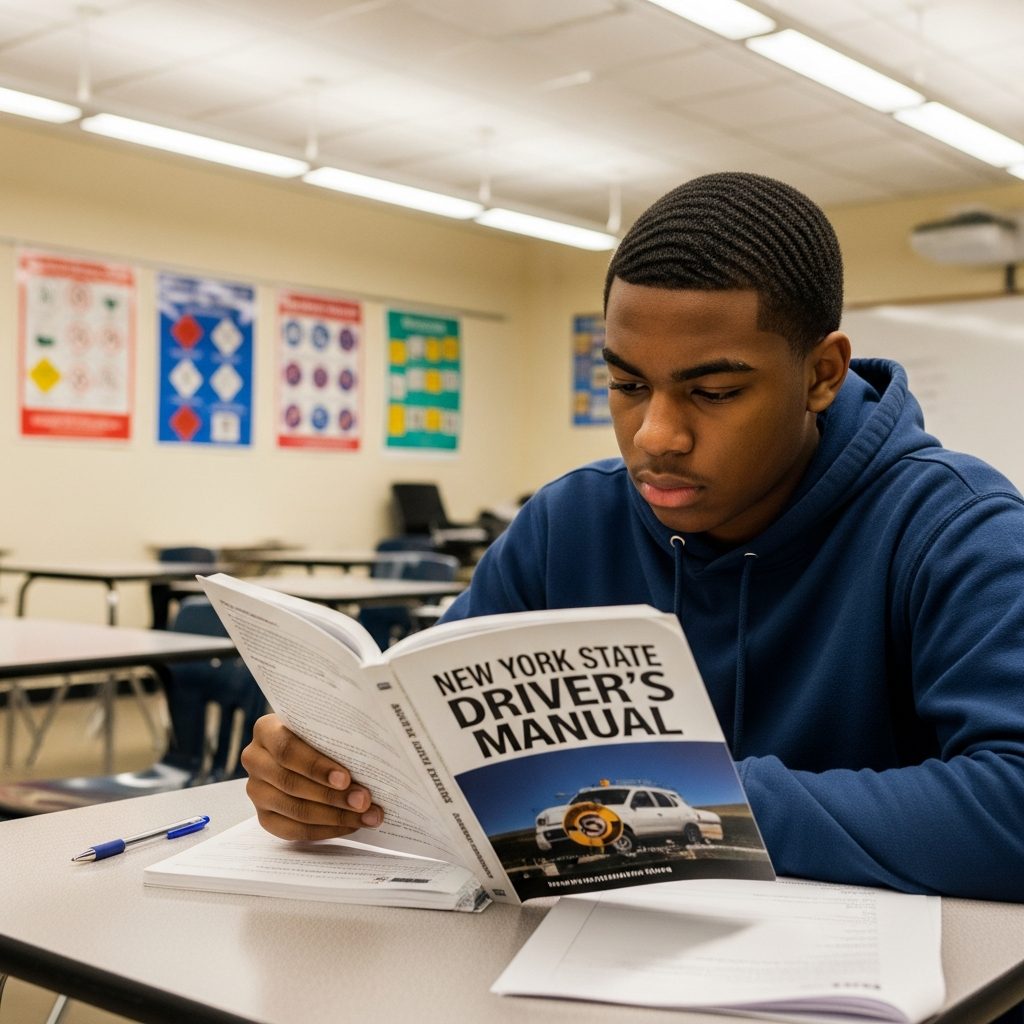
The straightforward fix? Spend thirty minutes with the New York State Driver’s Manual before your session. You don’t need to memorize everything – just familiarize yourself with the basics. Signs, right-of-way rules, the fundamentals. Actually, this is good practice anyway since the actual DMV written knowledge test is a separate hurdle you’re going to face.
Language and Accessibility Barriers
This one doesn’t get talked about enough. New York is extraordinarily diverse, and not every student is completely comfortable in English. Some driving schools offer courses in Spanish, Chinese, or other languages – and if that describes your situation, it’s absolutely worth seeking out a provider who teaches in your language. Comprehension matters here, not just completion.
Similarly, if you have a learning disability or need accommodations, ask about them upfront. Schools should be able to work with you, and the ones worth your money will actually try.
What to Expect After You Sign Up
Okay, so you’ve found a course, compared a few prices, maybe even handed over your credit card. Now what? This is where a lot of people get a little antsy – and honestly, that’s completely understandable. You want to know what you’re actually getting yourself into before you show up somewhere.
First things first: the 5-hour pre-licensing course is exactly what it sounds like. Five hours. Not four hours and forty-five minutes of actual learning crammed into a five-hour window, but a structured session that covers defensive driving concepts, the real risks of impaired and distracted driving, and what to expect when you’re actually behind the wheel with an examiner. It’s not glamorous. Some of it might feel a little slow, especially if you’ve been driving for a while already. That’s normal.
Most schools will give you a certificate of completion at the end – or mail it to you within a few days if you took the course online. Hold onto that certificate like it’s gold. You’ll need it to schedule your road test through the DMV.
The Timeline Is Probably Longer Than You’re Hoping
Here’s where I want to be really straight with you, because a lot of websites gloss over this part.
Completing the 5-hour course doesn’t mean you’ll be taking your road test next week. In many parts of New York – especially downstate, around New York City and Long Island – DMV road test appointments can be backed up for weeks. Sometimes months. That’s just the reality right now, and no amount of wishful thinking changes it.
So if you’ve got a specific deadline in mind – starting a job that requires you to drive, heading off to college, whatever it is – you’ll want to plan backward from that date and give yourself a serious cushion. Complete the 5-hour course as soon as you can, then get on the DMV scheduling site immediately. The slots fill up fast, and the early bird really does get the road test appointment here.
Actually, that reminds me – a lot of people don’t realize you can check multiple test sites. If your local DMV location is completely backed up, another site an hour away might have openings much sooner. Worth checking.
Between Now and Your Road Test
You’ve got the certificate. You’ve got the appointment. Now the waiting begins – and that waiting time is genuinely valuable if you use it right.
This is the stretch where real confidence gets built. Your 5-hour course gave you the knowledge foundation, but comfort behind the wheel comes from practice. And a lot of it. New York recommends at least 50 hours of supervised driving before your road test (including 15 hours at night), which sounds like a lot… and it kind of is. But it’s also the kind of thing that separates people who barely pass from people who pass easily and feel genuinely ready to drive on their own.
If you haven’t already, think about scheduling some professional driving lessons during this window. They’re separate from the 5-hour course, they’re additional cost, but they’re worth it for most new drivers. An instructor can catch habits you didn’t know you had.
Don’t Expect Perfection – Expect Progress
One thing worth saying out loud: it’s okay if you don’t feel totally ready right away. The 5-hour course is a starting point, not a finish line. A lot of new drivers walk out of it feeling a bit overwhelmed or uncertain – and then a few weeks of practice later, everything clicks.
The course isn’t designed to make you a great driver overnight. It’s designed to make you a safer, more aware driver over time. There’s a difference.
And if you take your road test and don’t pass on the first try? That’s more common than people admit. It doesn’t mean you’re a bad driver or that anything went wrong. It means you get to schedule again and try again – wiser for the experience.
The whole process, from completing your 5-hour course to holding your actual license, might take anywhere from a few weeks to several months depending on where you live and how quickly you can get a road test slot. Set that expectation now, and you won’t spend the whole time feeling frustrated. Patient, prepared, and persistent – that’s the combination that actually gets you there.
You’ve done the research, you’ve weighed the options, and now you’ve got a much clearer picture of what to expect when it comes to pricing for a 5-hour pre-licensing course in New York. And honestly? That’s half the battle right there.
Here’s the thing most people don’t realize – the cost of the course itself is almost never the stressful part. It’s the uncertainty around it. Not knowing if you’re getting a fair price, whether the course is legitimate, or if that suspiciously cheap option online is going to waste your Saturday. Now you know what reasonable looks like, what red flags to watch for, and how to find something that actually fits your schedule and your budget.
A Quick Gut-Check Before You Book
Prices in New York typically range from around $30 to $50 for most providers – though location, format (in-person versus online), and any bundled extras can nudge that number up or down a bit. If you see something dramatically lower than that range… pause. If it’s dramatically higher with no clear reason why, that’s worth questioning too. A fair price for a legitimate, DMV-approved course shouldn’t feel like a luxury purchase.
And don’t forget the little things that add up. Scheduling flexibility matters if you’re working around a job or school. Customer support matters if something goes wrong with your certificate. The “cheapest” option has a funny way of not being the cheapest when you factor all of that in.
The Bigger Picture Here
This course is a small investment in something that genuinely matters – your safety, your confidence behind the wheel, and your path to independence. Whether you’re a nervous first-timer who’s been putting this off for months, or a parent trying to help a teenager check the boxes as smoothly as possible, you deserve a process that feels straightforward. Not confusing, not stressful, not full of fine print.
New York’s pre-licensing requirement exists for good reason. Five hours of solid, structured instruction – done well – can genuinely shape how someone approaches driving for the rest of their life. That’s not nothing.
You Don’t Have to Figure This Out Alone
If you’re still not sure which option makes the most sense for your situation, or if you’ve got questions that this article didn’t quite answer – maybe about scheduling, what to bring, how the certificate process works – please just reach out. Seriously. There are no silly questions when it comes to navigating the licensing process, especially if this is your first time through it.
A quick phone call or message can save you a ton of back-and-forth confusion. Most reputable providers are genuinely happy to walk you through the details before you commit to anything. And if something ever feels off? Trust that instinct and ask.
You’re closer to ready than you probably think. The course is manageable, the cost is reasonable, and the whole process – while not exactly exciting – is absolutely doable. Plenty of people have gotten through it, and you will too.
Take a breath. Pick a provider that feels right. And know that there are people who want to help make this as smooth as possible for you.