8 Ways the 5 Hour Course Helps New York Teen Drivers

The text message pops up on your phone at 9:47 PM on a Tuesday: “Mom, can I borrow the car tomorrow?”
Your stomach does that little flip thing it’s been doing since your teenager got their learner’s permit. You know – that mix of pride and pure terror that comes with realizing your baby is about to become a statistic you’d rather not think about.
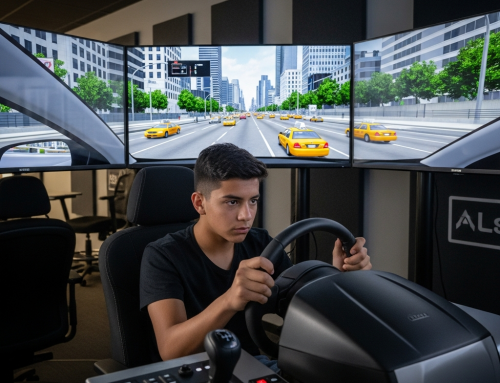
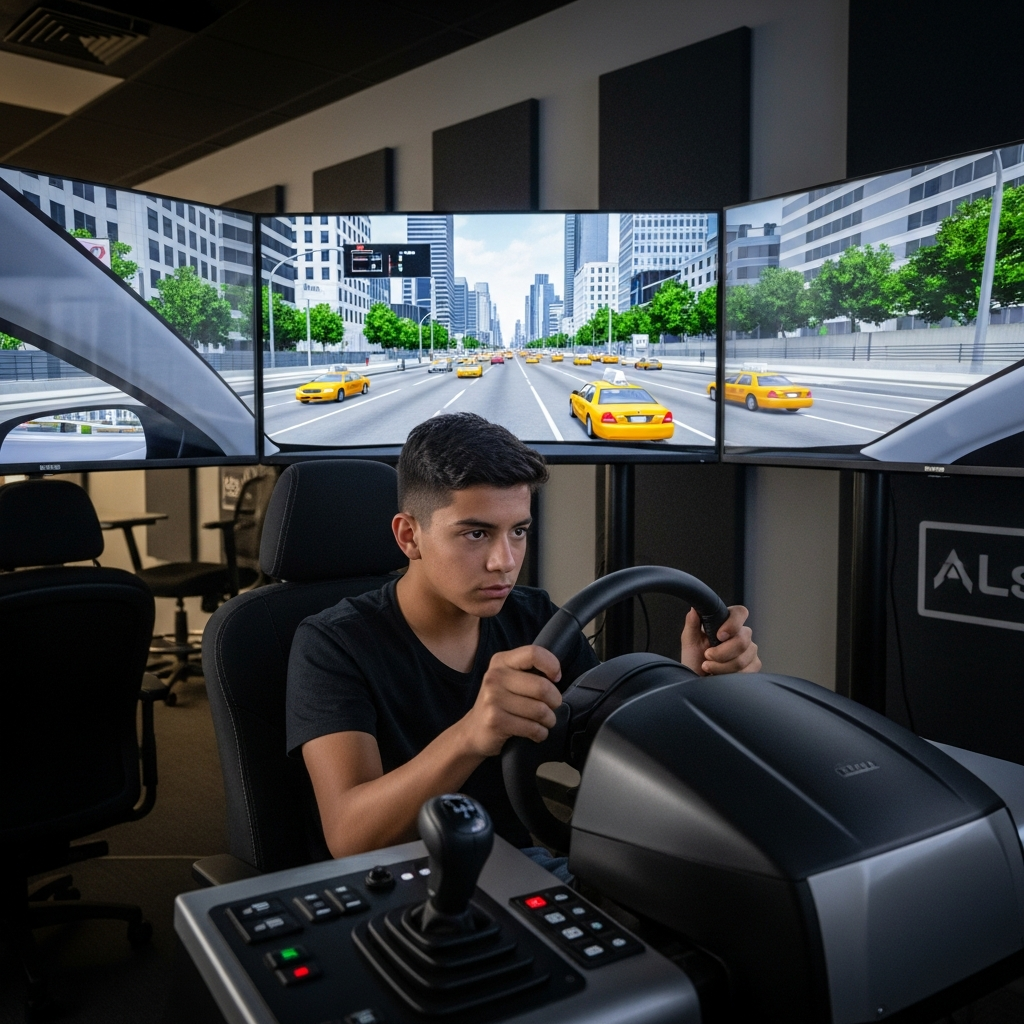
Here’s the thing about teenage drivers in New York… they’re actually pretty good at the mechanics of driving. They can parallel park (sometimes better than us, let’s be honest), they know their traffic signs, and they’ve probably logged more hours on driving simulators than we logged on actual roads growing up.
But there’s this gap – and it’s a big one.
It’s the difference between knowing how to drive and knowing how to survive driving. Between understanding the rules and understanding the unspoken language of the road. Between being technically competent and being genuinely safe.
That gap? That’s where the 5 Hour Course comes in, and honestly, it’s where a lot of parents breathe their first real sigh of relief.
You’ve probably heard about New York’s mandatory 5 Hour Pre-Licensing Course – it’s been around since 2003, which means if you’re reading this, there’s a decent chance you never took one yourself. (Lucky you, right?) Your teen can’t get their road test without completing it first. But here’s what most parents don’t realize: this isn’t just another bureaucratic hoop to jump through.
This course fills in those terrifying blanks that keep you awake at night. You know, the scenarios that make your palms sweat when you think about your kid behind the wheel alone for the first time…
Like what happens when they’re driving in heavy rain and suddenly can’t see the lane markers? Or when some aggressive driver starts tailgating them on the Cross Bronx Expressway? What about when they’re at a four-way stop and nobody seems to know whose turn it is?
The driving test teaches them to check their mirrors. The 5 Hour Course teaches them what to actually look for in those mirrors.
See the difference?
I’ve been talking to driving instructors, DMV officials, and – most importantly – parents and teens who’ve been through this process. What I’ve discovered is that this course does something pretty remarkable: it bridges that gap between “can drive” and “should drive alone.”
But – and this is important – not all 5 Hour Courses are created equal. Some schools treat it like a box to check. Others use it as a real opportunity to create safer, more confident drivers. The difference in what your teen walks away with? It’s huge.
Over the next few minutes, we’re going to walk through eight specific ways this course can actually transform your teenager from someone who simply passed their driving test into someone you’d trust with your car keys (and your peace of mind).
We’ll talk about defensive driving techniques that go way beyond “leave space between cars” – the kind of real-world strategies that help teens navigate everything from road rage to unexpected weather. You’ll learn how the course addresses those uniquely teenage tendencies that make parents nervous… like overconfidence, peer pressure, and yes, that phone that seems permanently attached to their hand.
We’ll also dive into some practical stuff – like how to choose the right driving school for the course (because they’re definitely not all the same), what your teen should expect during those five hours, and how you can reinforce what they’re learning at home.
Most importantly, we’ll explore how this course sets the foundation for a lifetime of safe driving habits. Because let’s face it – getting through the first year of independent driving is just the beginning. We want to raise drivers who’ll still be making smart choices behind the wheel when they’re 25, 35, and beyond.
Your teen might roll their eyes at having to spend five hours in a classroom before they can take their road test. But by the end of this article, you’ll understand why those five hours might just be the most valuable investment in their safety you’ll ever make.
Ready to feel a little more confident about handing over those keys?
What Exactly IS the 5 Hour Course?
Let’s start with the basics – because honestly, the name itself is pretty confusing. You’d think it’s just five hours of driving instruction, right? Actually… it’s not quite that simple.
The 5 Hour Pre-Licensing Course is New York’s way of making sure teen drivers get some essential classroom time before they can take their road test. Think of it as driver’s ed boot camp – condensed into one intensive session that covers everything from basic vehicle operations to defensive driving strategies.
Here’s where it gets a bit weird though – you don’t actually drive during these five hours. It’s all classroom-based learning, which might seem counterintuitive when you’re eager to get behind the wheel. But there’s solid reasoning behind this approach… kind of like how pilots spend countless hours in simulators before touching real controls.
The Legal Landscape (And Why It Matters)
New York state requires this course for anyone under 18 who wants a driver’s license. No exceptions, no shortcuts – and trust me, plenty of families have tried to find workarounds over the years.
The course must be completed through a DMV-approved driving school, and you’ll get a certificate at the end that’s basically your golden ticket to schedule the road test. Without it? You’re stuck with a learner’s permit indefinitely.
What’s particularly interesting is that New York was actually ahead of the curve on this requirement. While other states were still treating teen driver education as optional, New York recognized something important – that brief window between getting a learner’s permit and taking the road test was… well, let’s call it insufficient preparation time.
Beyond Basic Vehicle Operations
Now, you might assume the course just covers stuff like “this is the brake pedal, this is the gas pedal.” And yes, there’s some of that foundational material. But the real meat of the program goes much deeper.
The curriculum dives into risk assessment – teaching teens to spot potentially dangerous situations before they develop. It’s like developing a sixth sense for trouble, whether that’s recognizing when another driver might not see you or understanding how weather conditions change everything about vehicle handling.
There’s also significant focus on New York-specific driving challenges. City driving, for instance, requires completely different skills than suburban cruising. The course addresses these regional nuances in ways that generic driver’s education materials simply can’t match.
The Psychology Component (This Gets Interesting)
Here’s something most people don’t realize – a huge chunk of the 5 hour course focuses on the mental game of driving. Because here’s the thing: most teen accidents aren’t caused by lack of technical skill. They’re caused by poor decision-making, overconfidence, or simple inexperience with high-pressure situations.
The course spends considerable time on topics like peer pressure (because yes, having friends in the car completely changes driving dynamics), emotional regulation behind the wheel, and understanding personal limitations. It’s almost like therapy… but for your driving habits.
One section that really resonates with teens covers distraction management. And we’re not just talking about phones here – though that’s certainly part of it. The course explores how music volume, passenger conversations, even eating while driving can create dangerous situations.
Real-World Application Methods
What makes this course different from traditional driver’s education is its emphasis on scenario-based learning. Instead of just memorizing rules, students work through realistic situations they’ll actually encounter on New York roads.
For example, rather than simply stating “maintain safe following distance,” the course presents scenarios like navigating traffic during a sudden rainstorm on the Long Island Expressway. Students learn to think through the decision-making process… what factors should influence their choices? How do you balance multiple risks simultaneously?
The interactive elements keep things engaging too. Most approved schools use video simulations, group discussions, and case study analysis rather than just lecturing from textbooks. Because let’s be honest – sitting through five hours of pure lecture would be brutal for anyone, especially teenagers.
Setting Realistic Expectations
One thing the course does really well is helping teens understand that getting a license is just the beginning of learning to drive. It’s like graduating from training wheels to a two-wheeler – you’ve got the basics down, but mastery takes time and practice.
The course emphasizes that those first few months after getting licensed are statistically the most dangerous period for new drivers. But instead of just throwing scary statistics around, it provides practical strategies for managing that increased risk responsibly.
Getting the Most Out of Your Classroom Time
Here’s what no one tells you about the 5-hour course – it’s not just about sitting there for five hours. The instructors who’ve been doing this for years? They drop golden nuggets of information if you’re actually paying attention.
Bring a notebook. I know, I know… it feels very “extra” when everyone else is just scrolling their phones. But here’s the thing – when the instructor mentions that specific spot where cops always sit on Route 17, or explains exactly why that intersection near the mall is such a crash magnet, you’ll want to remember that stuff. Those aren’t just random examples; they’re based on real data from your area.
Sit toward the front if you can. Not because you’re trying to be teacher’s pet, but because you’ll hear the side comments and additional tips that get lost in the back rows. Plus, you’re less likely to zone out when you’re right there.
Smart Scheduling Strategies Your Parents Don’t Know
Most driving schools offer the course on weekends, after school, or during school breaks. But here’s what I’ve learned from working with hundreds of families – timing matters more than you think.
Take the course after you’ve had at least 10-15 hours of practice driving with your parents or a professional instructor. You’ll understand what they’re talking about when they discuss parallel parking disasters or highway merging anxiety. The course hits different when you can think, “Oh yeah, I totally did that wrong last week.”
Avoid taking it the weekend before your road test. Your brain needs time to process all that information, and cramming creates unnecessary stress. Give yourself at least two weeks between completion and your test date.
The Questions You Should Actually Ask
Don’t waste your question opportunities on stuff you can Google. Instead, ask about the specific challenges in your testing area. Every instructor has horror stories about the most common mistakes at your local DMV.
Ask about weather conditions – especially if you’re learning to drive during winter months. “What’s the deal with black ice on the Tappan Zee?” or “How do you actually handle snow on those steep hills in Westchester?” These aren’t covered in the standard curriculum, but they’re incredibly practical.
And here’s a sneaky good question: “What do examiners look for during the road test that surprises most students?” The answer usually reveals some specific habit you can work on before test day.
Making the Safety Lessons Stick
The course covers a lot of scary statistics about teen driving. Don’t tune out during these parts – use them strategically. When your friends are pressuring you to drive with five people crammed in your car (hello, violation of the junior license restrictions), remember that stat about how crash risk increases exponentially with each additional passenger.
Create mental connections between the safety lessons and your own experiences. That section about distracted driving? Think about your specific phone habits. Do you always have it within arm’s reach? Are you the type who needs to respond to texts immediately? The course gives you frameworks for changing these patterns before they become dangerous habits.
Prep Work That Actually Helps
Download the NY DMV app before your course. Not to study from – you don’t need to memorize the manual – but to familiarize yourself with how road signs are presented in official materials. When the instructor shows examples during class, you’ll recognize the format.
Watch a few YouTube videos of actual road tests in your area. This isn’t about cramming; it’s about context. When the instructor talks about three-point turns or parallel parking, you’ll have visual references for what success looks like.
Setting Yourself Up for Success After
The course gives you a completion certificate, but here’s what really matters – use those 30 days before you can take your road test wisely. Practice the specific skills covered in class, especially the ones that felt challenging when discussed.
Keep your course materials handy during practice sessions. When you mess up a maneuver, check back – there might be a specific tip or technique you forgot from class.
Most importantly, stay honest with yourself about what you learned versus what you still need to work on. The course covers a lot of ground quickly, and it’s totally normal to feel like some concepts need more practice time. That’s not a failure – that’s self-awareness, and it’s exactly the kind of thinking that creates safe drivers.
When Theory Meets Reality on Long Island Streets
Look, let’s be real for a minute. You can memorize every rule in the driver’s manual, ace your written test, and still find yourself white-knuckling the steering wheel when you’re merging onto the LIE during rush hour. That’s totally normal – and honestly? It’s exactly why the 5-hour course exists.
The thing is, most teens walk into their first real driving experience thinking they’ve got it all figured out. Then reality hits. Hard.
The Merge Monster (And How to Tame It)
Here’s what no one tells you: merging onto highways in New York isn’t just about checking your mirrors and signaling. It’s like trying to slip into a conga line that’s moving at 65 mph while everyone’s texting their friends about weekend plans.
The 5-hour course tackles this head-on by breaking down the merge into manageable pieces. You’ll practice the “look-signal-accelerate-merge” sequence until it becomes muscle memory. More importantly, you’ll learn to read traffic patterns – spotting those natural gaps that open up between clusters of cars.
One trick they teach? Don’t just look at the car directly in front of where you want to merge. Look three cars ahead. Traffic moves in waves, and once you start seeing those patterns…well, merging becomes less terrifying and more like a puzzle you actually know how to solve.
The Parallel Parking Panic
Let’s talk about parallel parking for a hot second. Because if you’ve ever watched a teenager attempt to squeeze their car between two vehicles on a busy Manhattan street, you know it can look like a very expensive game of Tetris gone wrong.
The course instructors get it. They’ve seen the sweaty palms, the multiple attempts, the inevitable moment when someone just gives up and drives around the block fourteen times looking for a spot they can pull straight into.
So they teach you the “reference point method” – using specific parts of your car (like when the side mirror lines up with the rear bumper of the front car) as visual cues. It’s not magic, but it works. They also emphasize something crucial: it’s okay to take your time. That impatient driver honking behind you? They’ll survive waiting an extra thirty seconds.
Night Driving: When Everything Changes
Daytime driving and nighttime driving are basically two different sports. Your depth perception shifts, those headlights create weird glares, and suddenly every shadow looks like it might be hiding a pedestrian.
The 5-hour course addresses this reality check by explaining how your vision actually changes after dark. They’ll teach you about the “20-second rule” – looking away from oncoming headlights and focusing on the right side of the road to avoid temporary blindness.
They also cover something parents often forget to mention: how much more tired you get when driving at night, especially as a new driver. Mental fatigue isn’t just being sleepy – it’s when your reaction time slows down and you start making those small judgment errors that can snowball into bigger problems.
The Phone Temptation (Yes, We’re Going There)
Look, everyone knows texting and driving is dangerous. But knowing something intellectually and actually resisting that notification ping when you’re stuck in traffic? Two completely different things.
The course doesn’t just lecture about distracted driving – they make it real. They’ll show you statistics about teen crashes (spoiler alert: they’re not pretty), but more importantly, they teach practical strategies. Like putting your phone in the glove compartment before you start the car, or using that “Do Not Disturb While Driving” feature that actually works pretty well.
They also address the social pressure aspect. Because let’s be honest – when your friends are all texting in the group chat and you’re the one who’s driving, there’s this weird FOMO that kicks in. The course helps you reframe that: being the responsible driver isn’t boring, it’s literally keeping everyone alive.
Weather Reality Check
New York weather is…unpredictable. One minute it’s sunny, the next you’re driving through a downpour that makes your windshield wipers look like they’re giving up on life.
The 5-hour course covers defensive driving techniques for different weather conditions, but here’s what really matters: they teach you when NOT to drive. Sometimes the most mature decision is recognizing that you’re not ready for certain conditions yet – and that’s perfectly okay.
That’s not failure. That’s wisdom.
What Happens After You Complete the Course
So you’ve finished your five hours, printed out that completion certificate, and you’re probably thinking – okay, what’s next? The honest truth is… there’s still some waiting involved. I know, I know – not exactly what you want to hear when you’re practically vibrating with excitement to get behind the wheel.
Here’s the deal: completing the 5-hour course doesn’t mean you’re magically ready for your road test tomorrow. Think of it more like finishing your CPR certification – you’ve got the knowledge, but you still need practice before you’d feel confident in an emergency. The course gives you the foundation, but building actual driving skills? That takes time.
Most teens need about 3-6 months of regular practice after the course before they’re truly road test ready. And “regular” means at least a couple times a week, not just Sunday drives to grandma’s house. Your brain needs time to process all those new concepts and turn them into muscle memory.
Booking Your Road Test (And the Reality Check)
Once you’ve got that course completion certificate, you can schedule your road test. But here’s where things get… interesting. DMV appointments in New York can be booked out for weeks, sometimes months, depending on where you live. Upstate? You might snag something in a few weeks. NYC metro area? Yeah, you could be looking at a 2-3 month wait.
This actually works in your favor, though – even if it doesn’t feel like it right now. That wait time gives you space to practice without the pressure of an looming test date. You’ll thank yourself later when you’re not cramming driving practice into a frantic two-week window.
Pro tip from someone who’s seen way too many failed road tests: don’t book your test the second you finish the course. Give yourself at least a month of practice first. Trust me on this one.
The Practice Phase (Where the Real Learning Happens)
Here’s what’s normal during those practice months – and what’s not worth panicking about. You’re going to have days where parallel parking feels impossible, where you forget to check your blind spot, where your three-point turns look more like… well, seven-point turns. That’s completely normal.
Your supervising driver (usually a parent, bless their patience) might have a few white-knuckle moments. They might grab the door handle when you’re making a perfectly safe turn. They might gasp when you’re still three car lengths away from anything dangerous. This is their problem, not yours – though a little extra caution never hurt anyone.
What you should expect: steady improvement, but not linear progress. Some days you’ll feel like a driving prodigy. Other days? You’ll wonder if you should just stick to walking. Both feelings are normal, and neither one reflects your actual driving ability.
When You’re Actually Ready for the Road Test
You’ll know you’re ready when driving starts feeling… boring. When you can handle a trip to the grocery store without your supervising driver offering helpful commentary every thirty seconds. When you can parallel park on the first try (okay, second try) without breaking into a sweat.
More specifically, you should be comfortable with
– Highway driving in moderate traffic – Parking in actual parking lots (not just empty ones) – Driving in your test area during different times of day – Handling unexpected situations without freezing up
The 5-hour course concepts should feel automatic by now. You’re not consciously thinking “check mirrors, signal, check blind spot” – you’re just doing it.
Beyond the Road Test
Passing your road test isn’t the finish line – it’s more like graduation from driver’s ed to real-world driving school. You’ll keep learning and improving for months, even years. Your first solo drive to school will feel different than your hundredth.
The habits and mindset you developed during the 5-hour course become your safety net during those early solo months. When something unexpected happens – and it will – you’ll fall back on those systematic approaches to scanning, signaling, and decision-making.
Give yourself credit for taking this seriously. The fact that you completed the course and you’re thinking ahead about practice and preparation? That already puts you ahead of plenty of new drivers who just want to rush through everything.
You’ve got this – just remember that “got this” includes being patient with the process.
Supporting Your Teen Through This Important Milestone
You know, when I think about everything we’ve covered here, it really comes down to one thing – giving your teenager the best possible foundation for a lifetime of safe driving. And honestly? That’s no small task in a state like New York, where the roads can be… well, let’s just say they’re not exactly forgiving to new drivers.
The five-hour course isn’t just another hoop to jump through (though I know it can feel that way when you’re juggling work, school schedules, and everything else life throws at you). It’s actually designed to fill in those gaps – the stuff that driving practice in an empty parking lot just can’t teach. Like how to handle that moment when someone cuts you off on the FDR Drive, or what to do when you’re stuck behind a double-parked car in Manhattan and traffic’s backing up behind you.
I’ve seen so many families stress about this whole process. Parents wondering if they’re doing enough, teens feeling overwhelmed by all the rules and requirements… it’s completely normal to feel a bit scattered about it all. But here’s what I want you to remember – every single safety skill your teen picks up now is an investment in their future. Every defensive driving technique, every lesson about reading other drivers’ behaviors, every discussion about the real consequences of distracted driving… it all adds up.
The course gives them tools they’ll actually use. Not just to pass their road test (though that’s important too), but for all those real-world situations they’ll face once they’re driving independently. And let’s be honest – in New York, they’ll face plenty of them. From navigating busy intersections to dealing with aggressive drivers to handling unexpected weather conditions, the more prepared they are, the better.
What really matters is that your teen feels confident behind the wheel. Not overconfident – that’s dangerous – but genuinely prepared for what’s ahead. The structured learning environment, the practical scenarios, the chance to ask questions without feeling judged… all of this contributes to building that solid foundation we’ve been talking about.
And you? You’re doing exactly what you should be doing by researching this, by caring enough to make sure your teen gets proper training. That kind of involvement makes such a difference – more than you probably realize.
Ready to Take the Next Step?
If you’re feeling ready to get your teen enrolled in their five-hour course, or if you still have questions about the whole process, don’t hesitate to reach out. Seriously – we’re here to help make this as smooth as possible for both you and your teen.
Whether you want to know more about what specific topics the course covers, need help finding a convenient schedule, or just want to talk through any concerns you might have… we get it. This is a big step, and having someone knowledgeable in your corner can make all the difference.
Give us a call, send an email, or stop by – whatever works best for you. We’ve helped hundreds of New York families through this process, and we’d love to support yours too.