Why New York Requires a 5 Hour Driving Course

Picture this: You’re sitting in the DMV waiting room, watching the clock tick toward your appointment time, when the person next to you starts frantically scrolling through their phone. “Wait,” they mutter, “I need HOW many hours of driving class?”
Sound familiar?
If you’re planning to get your license in New York – whether you’re a nervous teen, a transplant from another state, or someone who’s finally ready to ditch the subway commute – you’ve probably stumbled across this little surprise. Five whole hours of pre-licensing education. And honestly? Your first reaction was probably something like, “Seriously? I’ve been driving since I was twelve on my uncle’s farm” or “I’ve got a clean record from three other states!”
Here’s the thing though… New York didn’t just pull this number out of a hat to make your life more complicated (though I know it feels that way when you’re already juggling work, family, and trying to figure out parallel parking).
The state has some pretty specific reasons for requiring these five hours – and they’re not all about the obvious stuff you’d expect. Sure, there’s the whole “teaching you to drive safely” angle, but there’s also a fascinating web of insurance politics, legal liability, and… well, let’s just say New York has learned some expensive lessons over the years.
You know what’s wild? Most people think this requirement is just another bureaucratic hoop to jump through. But when you actually dig into the *why* behind it – the real reasons, not the official DMV-speak – it starts to make a lot more sense. And more importantly, understanding these reasons can actually help you navigate the whole process more strategically.
I mean, think about it. You’re already investing time and money into getting your license. Wouldn’t it be nice to know exactly why you’re being asked to do this particular thing? Especially when that knowledge might help you choose the right course, avoid common pitfalls, or even save some cash in the long run?
Because here’s what most people don’t realize – this isn’t just about checking a box. The five-hour course actually covers some stuff that… well, let’s just say your driving instructor probably won’t mention. Things like how your insurance company views these courses (hint: it matters more than you think), what happens if you skip certain parts, and why the timing of when you take it can actually affect your overall licensing timeline.
And if you’re coming from out of state? Oh boy, there are some quirks in the system that nobody tells you about upfront. Like how your previous driving experience might count… or might not. Or why some people can get partial waivers while others can’t, even with seemingly identical backgrounds.
The whole thing becomes even more interesting when you realize that this requirement has evolved quite a bit over the years. It’s not like New York woke up one day and decided five hours was the magic number. There’s actually a whole history here – involving everything from accident statistics to pressure from driving schools to, yes, even some political maneuvering that would make you roll your eyes.
But don’t worry – I’m not going to bore you with a dry history lesson or regurgitate the same basic info you can find on the DMV website. Instead, we’re going to explore the real story behind this requirement. The practical stuff you actually need to know.
We’ll talk about what these five hours actually entail (spoiler: it’s not all what you’d expect), how to choose a course that’s worth your time, and what red flags to watch out for when shopping around. Plus, I’ll share some insider tips about timing, scheduling, and how to make the whole experience as painless as possible.
Because let’s be honest – you’re going to have to do this anyway. You might as well understand why, and use that knowledge to your advantage.
Ready to figure out what New York is really asking of you? Let’s break down this five-hour mystery…
The Numbers Game Behind New York’s Decision
Here’s the thing about traffic fatalities – they’re not just statistics on a government spreadsheet. Each number represents someone’s parent, child, or best friend who didn’t make it home. And frankly, New York’s numbers were getting pretty scary.
Back in the early 2000s, teen drivers were involved in a disproportionate number of crashes. We’re talking about 16 and 17-year-olds who, despite passing their road test, were still crashing at rates that made insurance companies – and parents – lose sleep. It’s kind of like passing a swimming test in a calm pool, then being thrown into ocean waves. The basic skills are there, but the real-world application? That’s a whole different beast.
The state looked around and noticed something interesting. Other places that had implemented pre-licensing courses were seeing measurable drops in crash rates among new drivers. Not earth-shattering changes overnight, but consistent, meaningful improvements. Sometimes the most effective solutions are the ones that seem almost too simple.
What Makes Teen Brains Different (And Why That Matters)
This might sound a bit nerdy, but bear with me – the science here actually explains a lot. Teenage brains are literally under construction. The prefrontal cortex, which handles decision-making and risk assessment, doesn’t fully develop until around age 25.
Think of it like having a really powerful sports car (teenage reflexes and confidence) with a GPS that’s still downloading updates (judgment and experience). They’ve got the physical ability to drive – often better reflexes than us older folks – but the decision-making part? That’s still calibrating.
A 5-hour course can’t magically mature a teen’s brain, but it can give them frameworks for making better choices. It’s like installing some guardrails for that still-developing judgment system.
The Reality Check Most Driving Tests Miss
Traditional road tests are… well, let’s be honest, they’re pretty limited. You parallel park, make a few turns, maybe navigate a school zone. But when was the last time you saw a road test that included merging onto I-95 during rush hour? Or handling that heart-stopping moment when a deer jumps into your headlights?
The standard test is like judging someone’s cooking skills based solely on their ability to boil water. Sure, it’s a fundamental skill, but it doesn’t tell you much about how they’ll handle Thanksgiving dinner for twelve people.
What the 5-hour course does is fill in some of those gaps. It covers scenarios that are tough to recreate in a typical road test but happen constantly in real driving. Weather conditions, highway merging, dealing with aggressive drivers – you know, all the stuff that makes experienced drivers grip the steering wheel a little tighter.
The Insurance Company Perspective (Because Money Talks)
Let’s be real – insurance companies aren’t known for their generosity. So when they started offering discounts for completing pre-licensing courses, that was a pretty clear signal that these programs actually work.
Insurance companies live and breathe risk assessment data. If they’re willing to reduce premiums for course completers, it’s because their actuaries – those math wizards who calculate risk for a living – found solid evidence that these drivers file fewer claims. And fewer claims means fewer crashes.
It’s actually kind of reassuring when the people whose job it is to predict risk are betting on something. They’ve got access to crash data, claim histories, and statistical models that would make your head spin.
The Ripple Effect Nobody Talks About
Here’s something that doesn’t get mentioned much – safer teen drivers means safer roads for everyone. When you reduce the number of inexperienced drivers making poor split-second decisions, you’re not just protecting them. You’re protecting every other driver, pedestrian, and cyclist sharing the road.
Think of it like herd immunity, but for traffic safety. The more drivers who have solid foundational knowledge about defensive driving and hazard recognition, the more predictable and safer traffic patterns become overall.
New York’s 5-hour requirement isn’t just about checking a bureaucratic box – it’s about creating a culture where safe driving habits start early and stick around for the long haul.
Finding the Right Course Provider (It’s Not All Created Equal)
Here’s what they don’t tell you – not all 5-hour courses are the same. Some instructors just pop in a DVD from 2003 and call it a day. Others actually… you know, teach.
Look for schools that offer interactive sessions, not just passive video watching. Ask about their pass rates for road tests – good schools track this stuff. If they hem and haw when you ask? Red flag. The best instructors will tell you exactly how their students perform because they’re proud of it.
Pro tip: check if they offer weekend or evening classes. Most people don’t realize you can knock this out on a Saturday morning instead of burning a vacation day.
Timing Your Course Strategically
This is where people mess up constantly. They take the course, get their certificate… then wait six months to actually schedule their road test. Don’t be that person.
The sweet spot? Complete your 5-hour course 2-4 weeks before your planned road test. The information stays fresh, you’re still in “driving student” mode, and you haven’t forgotten those specific New York quirks they cover (like how to handle those terrifying parkway merges).
If you’re under 18, remember – you need to hold your learner’s permit for at least 6 months before taking the road test. Plan backwards from there. Got your permit in January? Take the course in June, test in July. Simple math that saves headaches.
What to Bring (Beyond the Obvious)
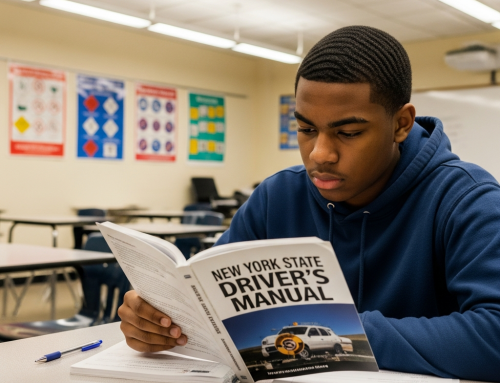
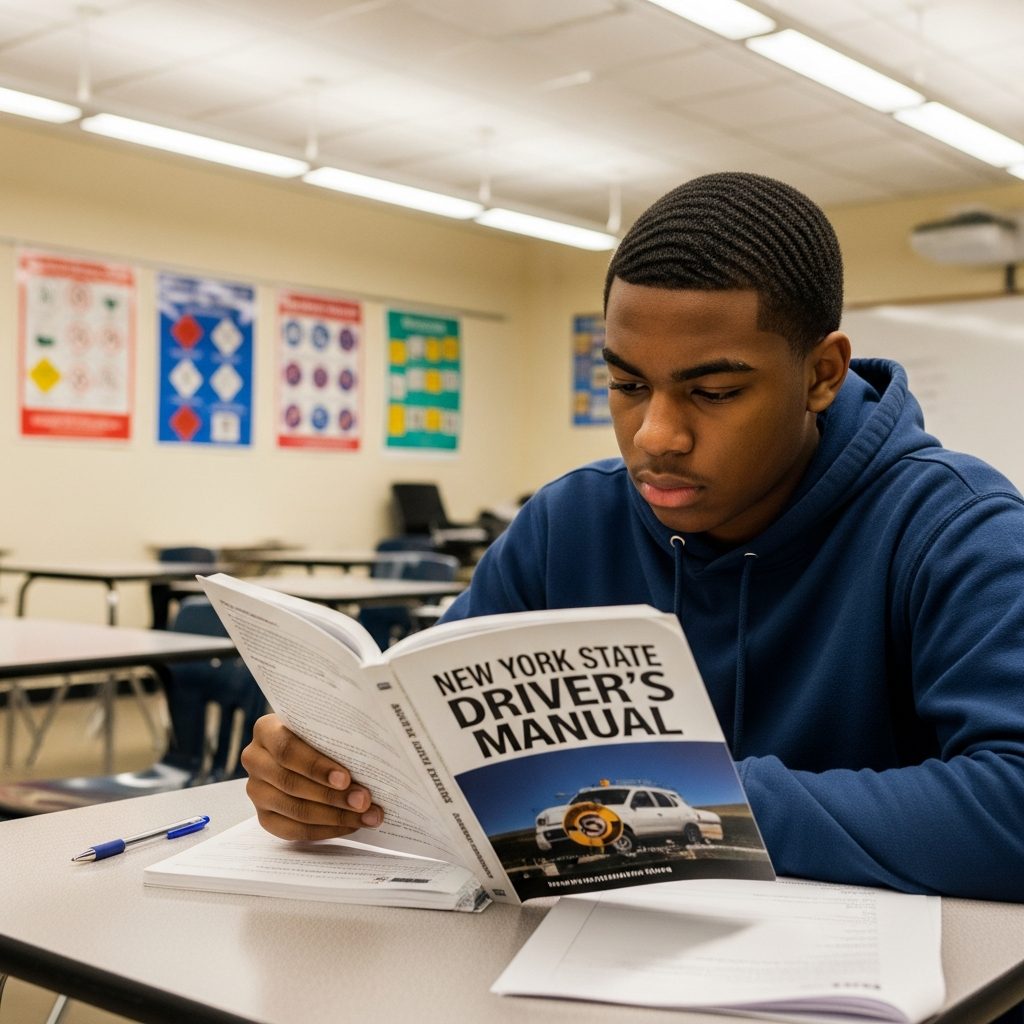
Everyone knows about the ID and permit. But here’s what catches people off guard: bring a pen that actually works. Seriously. Half these places have pens that died during the Clinton administration.
Pack snacks if it’s a longer session. Your brain needs fuel, and gas station coffee doesn’t count as nutrition. Also? Comfortable shoes. Some courses include actual vehicle walkthroughs in parking lots.
One thing that surprised me – bring questions. Not just “when’s the break?” kind of questions, but real ones about situations you’ve encountered while practicing. Good instructors love this stuff. They’d rather spend time on your actual concerns than reciting handbook pages you could read at home.
Getting the Most Value From Those 5 Hours
Here’s the insider secret: the course isn’t just about meeting requirements. It’s intelligence gathering for your road test.
Pay attention when they discuss common test routes and failure points. Take notes – real ones, not just mental ones that’ll disappear by Tuesday. Ask about the specific DMV office where you’ll test. Each location has its quirks, and experienced instructors know them all.
Don’t just sit there nodding. Engage. Ask about parallel parking tips for your specific testing area. Find out which intersections are notorious for catching new drivers off guard. This isn’t school where participation points don’t matter – this information could save you from retaking the road test.
After the Course: Making It Stick
Getting that completion certificate feels great, but don’t just stuff it in a drawer. Review your notes within 48 hours while everything’s still clear.
Actually practice what they taught you. If they covered proper following distance, measure it out next time you’re driving with a licensed adult. Those “practical” tips become second nature only through repetition.
And here’s something nobody mentions – keep that certificate safe. Not “throw it in the glove compartment” safe, but “file it with important documents” safe. You’ll need it for your road test, and getting a replacement is a bureaucratic nightmare you don’t want to navigate.
The Real Payoff (Beyond Just Passing)
Look, everyone focuses on checking the box and moving on. But students who actually absorb this material? They become better drivers, period.
The course covers defensive driving techniques that’ll serve you well beyond the test. Understanding right-of-way rules doesn’t just help you pass – it might prevent you from getting T-boned at a four-way stop someday.
Plus, many insurance companies offer discounts for completing these courses. It’s not huge money, but over time? It adds up to more than the course cost. Sometimes being a good driver actually pays – literally.
The bottom line: treat this as an investment in becoming a competent, confident driver, not just another hoop to jump through. Your future self (and everyone sharing the road with you) will thank you.
The Reality Check: What Actually Makes People Struggle
Let’s be honest – most people don’t fail the 5-hour course because they’re bad drivers. They struggle because… well, nobody really prepares you for what it’s actually like.
The biggest shock? It’s not just about driving. Sure, you’ll cover the basics – traffic laws, road signs, defensive driving techniques. But here’s what catches people off guard: you’re also diving deep into statistics about crash rates, injury prevention, and some pretty sobering stuff about impaired driving. One minute you’re learning about proper following distance, the next you’re looking at charts about fatality rates among teen drivers. It’s a lot to process, especially when you just wanted to learn how to parallel park.
And then there’s the time factor. Five hours sounds manageable until you’re actually sitting there. Your brain starts to fog up around hour three – you know that feeling when you’ve been studying too long and everything just becomes white noise? Yeah, that happens.
When the Information Overload Hits
Here’s something driving schools won’t tell you upfront: the course covers way more material than you’d expect. We’re talking defensive driving strategies, New York’s specific traffic laws (and trust me, they’re different from other states), accident prevention, the psychology behind road rage… it keeps going.
Sarah, one of our recent students, put it perfectly: “I thought I’d learn about stop signs and speed limits. Instead, I got a crash course in human behavior and risk assessment.” She wasn’t wrong.
The solution? Don’t try to memorize everything in real-time. Take notes – actual handwritten notes, not just mental ones. Your instructor will highlight the most important stuff, but when you’re drowning in information, it all starts to sound equally crucial. Jot down key points, especially the New York-specific regulations. You’ll thank yourself later.
The Participation Problem
Here’s where it gets awkward. Many courses require active participation – discussions, scenario responses, maybe even role-playing exercises. If you’re someone who prefers to blend into the background… well, that’s not really an option.
The instructors want to see that you’re engaged, that you’re actually absorbing the material. They might call on you to explain what you’d do in a specific driving situation, or ask for your thoughts on a case study. For some people, this feels natural. For others? It’s torture.
The fix: Prepare a few go-to responses ahead of time. Things like “I’d increase my following distance” or “I’d check my mirrors and signal early” work for most scenarios. You don’t need to be the star of the show – just show that you’re paying attention and thinking critically about the situations presented.
Technology Troubles and Administrative Hiccups
Let’s talk about the stuff that has nothing to do with actual driving knowledge but can derail your entire experience. Online courses that glitch out right before the final quiz. Certificates that don’t generate properly. Scheduling systems that… well, let’s just say they weren’t designed by people who actually use them.
If you’re taking an online course, test your technology beforehand. Make sure your browser is updated, your internet connection is stable, and you have a backup plan if things go sideways. Screenshot important pages as you go – it sounds paranoid, but you’ll be glad you did if the system crashes during your final assessment.
For in-person courses, confirm your enrollment at least 24 hours before. Bring a backup form of payment and print any confirmation emails. Administrative mix-ups are frustratingly common, and you don’t want to lose a day because of a scheduling error.
Making the Time Investment Work
Five hours is five hours – there’s no way around that. But you can make those hours more productive by coming prepared mentally and physically. Eat something substantial beforehand (nothing worse than your stomach growling through hour four), bring water, and accept that you’re going to be there for a while.
Actually, that reminds me – some people try to rush through just to get it over with. Bad idea. The point isn’t just to check a box; it’s to actually learn things that might save your life or someone else’s. The statistics they share? The defensive driving techniques? That stuff matters when you’re navigating Brooklyn traffic or dealing with an aggressive driver on the FDR.
The course might feel like a hurdle, but it’s actually designed to make you a safer, more confident driver in one of the most challenging driving environments in the country.
What to Expect After Completing Your 5-Hour Course
Alright, let’s be real here – finishing your 5-hour course isn’t like crossing the finish line at a marathon. You’re not done… you’re actually just getting started. Think of it more like you’ve just finished the tutorial level of a video game. The real adventure? That’s what comes next.
Most students walk out of their course feeling a mix of accomplishment and, well, slight panic. You’ve got your completion certificate in hand (don’t lose it – seriously, treat it like cash), but suddenly the weight of actually getting behind the wheel hits you. That’s completely normal. Actually, that little flutter of nerves? It means you’re taking this seriously, which is exactly what you should be doing.
The Reality Check: Your Timeline Isn’t Going to Be Perfect
Here’s something your instructor probably mentioned but bears repeating – there’s no magic timeline for becoming a confident driver. Some people need 20 hours of practice before they feel ready for the road test. Others need 40. Or 60. And that’s okay.
I’ve seen teenagers who seem to absorb driving skills through osmosis (must be nice, right?), and I’ve seen others who need months to feel comfortable just backing out of a driveway. Both groups can become excellent drivers – they just get there at different speeds.
The state requires a minimum of 6 months between getting your permit and taking your road test if you’re under 18. That might feel like forever when you’re 16, but trust me… you’ll need most of that time. Those months aren’t just bureaucratic red tape – they’re your safety net.
Your Permit: The Training Wheels You Actually Need
Once you’ve got your learner’s permit, the real education begins. The 5-hour course gave you the foundation, but now you’re building the house. And let me tell you, those first few practice sessions can be… interesting.
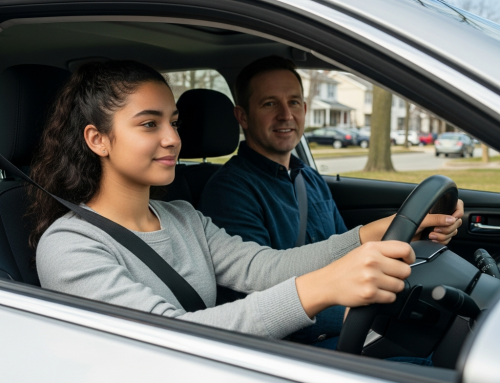
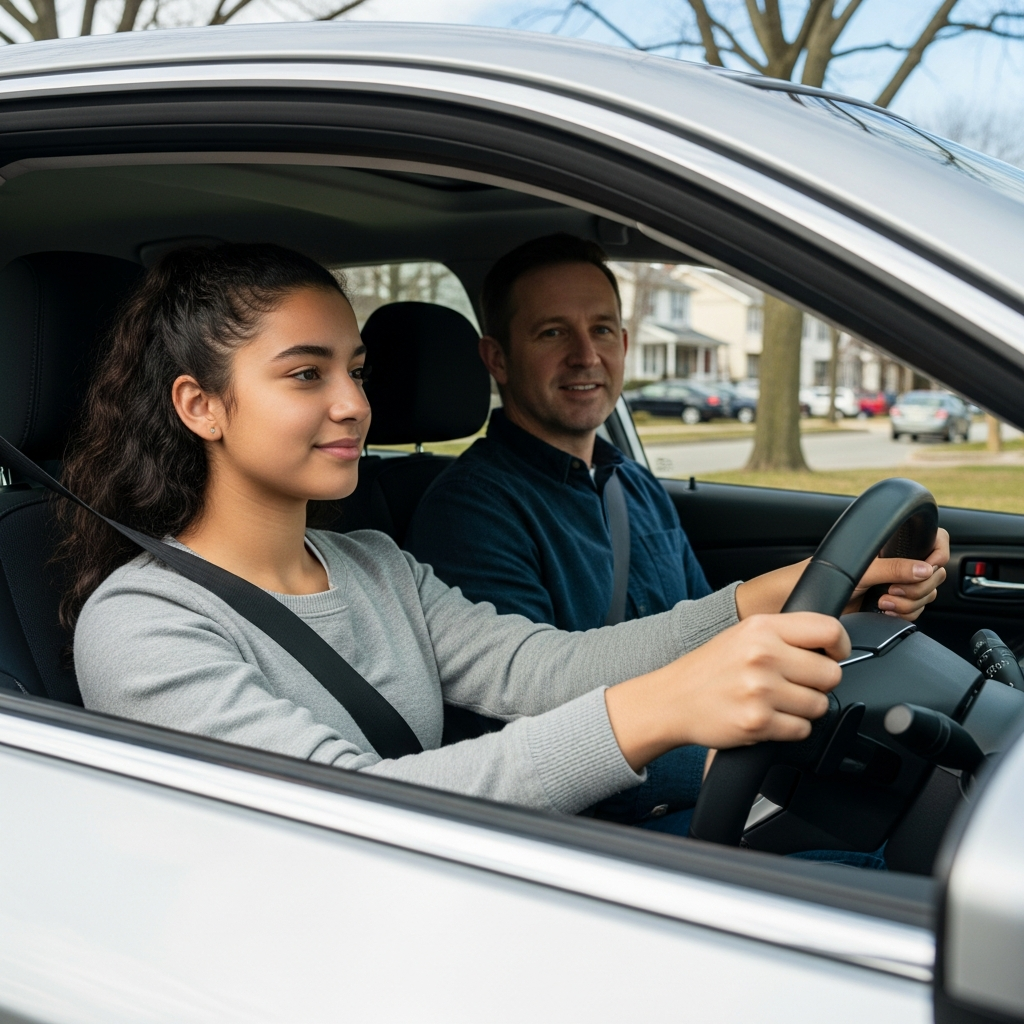
Your parents or supervising driver might be more nervous than you are (which is saying something). They’ll probably grip the door handle like their life depends on it – because, in their minds, it does. Cut them some slack. They love you, and watching their kid navigate traffic for the first time ranks somewhere between terrifying and heart-stopping.
Start small. Empty parking lots are your friend. Master the basics – smooth starts, gentle stops, parking between those white lines – before you even think about real roads. You wouldn’t try to run a marathon without training, and you shouldn’t jump into highway driving without mastering the fundamentals.
Practice Makes… Well, Not Perfect, But Competent
Here’s what normal progress looks like: slow. Frustratingly, wonderfully slow.
Week one might be all about not stalling (if you’re learning manual) or remembering to signal every. single. turn. Week five, you might finally stop gripping the steering wheel like you’re trying to strangle it. Month three? You’ll probably have your first moment where driving feels almost… natural.
Don’t compare yourself to your friends who got their licenses first. Sarah might’ve passed her road test on the first try, but maybe she also rear-ended someone in a parking lot two weeks later. Slow and steady isn’t just a cute saying – it’s smart strategy.
Scheduling Your Road Test: When You’re Actually Ready
The temptation to schedule your road test for exactly 6 months after getting your permit is strong. Resist it. Just because you *can* take the test doesn’t mean you *should*.
You’ll know you’re ready when parallel parking doesn’t make you break into a cold sweat, when you can merge onto a highway without your supervising driver’s knuckles turning white, and when you can drive for an hour without feeling completely drained afterward.
Most driving instructors (the good ones, anyway) will tell you honestly when you’re ready. If they suggest more practice time, listen. That extra month of practice could save you the frustration and expense of retaking the test.
Building Real-World Confidence
The road test is just one day. Your real goal? Becoming the kind of driver who can handle whatever New York throws at you – and trust me, this state will throw everything at you. Construction zones that appear overnight, aggressive drivers who think turn signals are optional, weather that changes faster than your mood…
Take it one mile at a time. You’ve got this.
Making the Road Safer – One Course at a Time
Look, I get it. When you first hear about this five-hour requirement, it probably feels like just another hoop to jump through. Another box to check. But here’s the thing – New York didn’t create this rule to make your life harder (though I know it might feel that way when you’re scrambling to fit it into your schedule).
The state looked at the data, saw too many preventable accidents involving new drivers, and said, “We need to do better.” And honestly? They were right. Those five hours aren’t just about learning where to put your hands on the steering wheel or how to parallel park – though you’ll definitely cover that stuff too.
It’s about building something deeper. Confidence, sure, but also respect for just how much responsibility comes with getting behind the wheel of a two-ton vehicle. You’re not just learning to drive… you’re learning to share the road safely with everyone else – the mom dropping kids at school, the delivery driver trying to make a living, the elderly couple heading to their doctor’s appointment.
The best part? You don’t have to figure this out alone. Whether you’re 16 and itching to get your first taste of freedom, or you’re an adult who’s finally ready to tackle this milestone – there are people who want to help you succeed. Driving instructors who’ve seen it all, who know exactly how to break down complex maneuvers into manageable steps, who won’t judge you if you need to practice backing up seventeen times before it clicks.
And let’s be real for a moment – some of you reading this might be feeling overwhelmed by more than just driving. Maybe you’re managing other health challenges, dealing with anxiety about being on the road, or working through physical limitations that make traditional driving instruction feel intimidating. That’s okay. There are instructors who specialize in adaptive techniques, who understand that one size definitely doesn’t fit all.
The five-hour course isn’t the end goal – it’s the foundation. Think of it as your safety net, giving you the tools and knowledge you need before you venture out on your own. Because once you pass that road test and get those keys? The real learning begins. Every drive teaches you something new about yourself, your vehicle, and how to navigate this crazy world we live in.
Ready to Take the Wheel?
If you’re feeling nervous about starting this process, or if you have questions about how your health might affect your driving journey, don’t keep those worries to yourself. We’ve helped countless people work through their concerns and find the right path forward – whether that’s connecting with the right driving school, understanding accommodations that might be available, or just talking through what to expect.
Reach out to us. Seriously. We’re here not just for weight loss support, but because we believe in helping our community members tackle all of life’s challenges with confidence. Your independence matters, your safety matters, and you deserve all the support you need to get there safely.